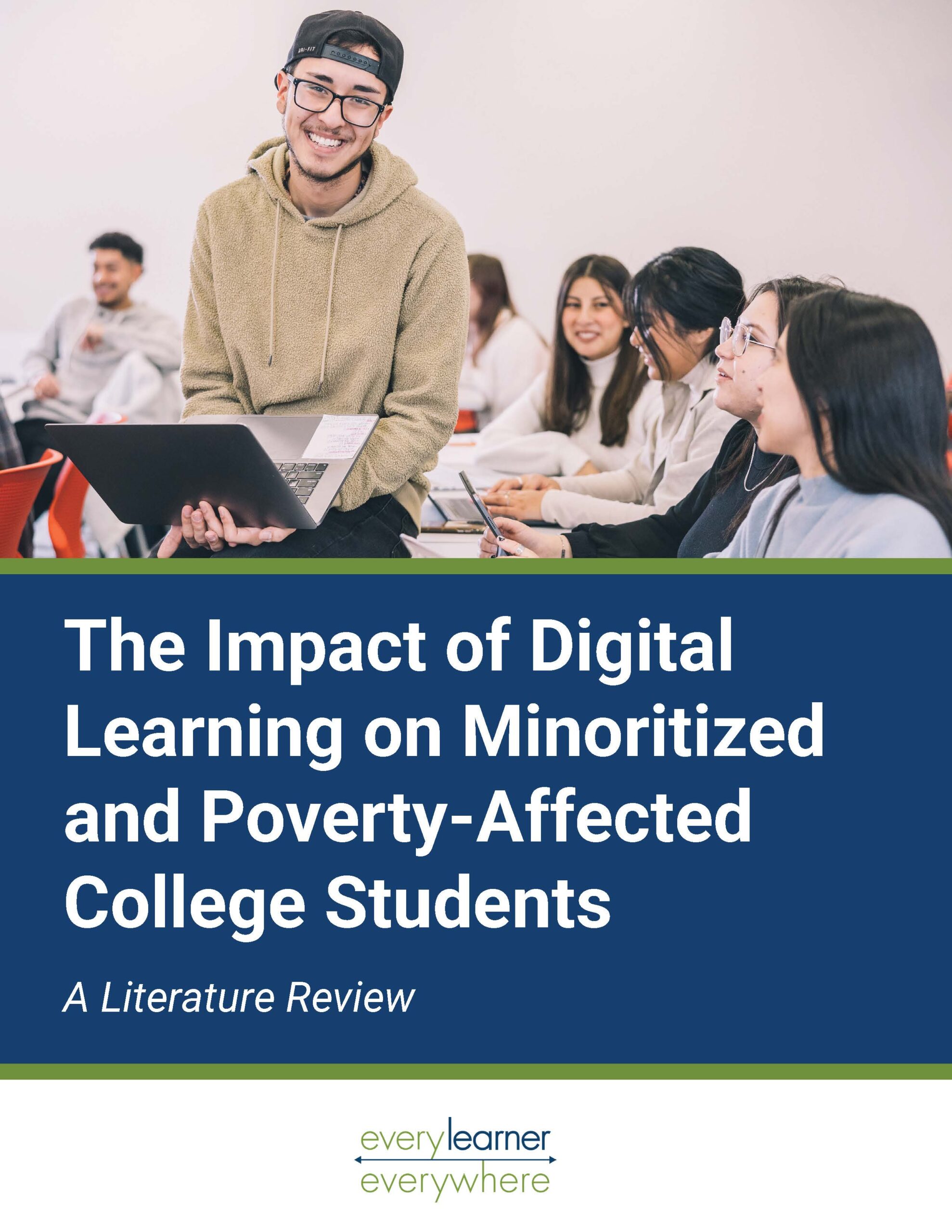
The focus of this resource paper is to assess the effectiveness of digital learning in decreasing equity gaps as well as the impact digital learning has on specific student populations: those who identify as Black, Latino, and Indigenous; students from low-income backgrounds; and first-generation students. In this study, digital learning includes a broad range of curricular models, content and communication tools, design strategies, and instruction that personalizes instruction for students in both blended and online learning environments. This does not include emergency remote instruction during the lockdown and shelter stages of the COVID-19 pandemic as the variables of that situation—such as illness, trauma, and lack of digital learning tools and broadband access—cannot be reasonably included in data collected during normal campus operations. Rather, this study will focus on specifically designed curriculum and pedagogy for online and blended classes.
Download The Impact of Digital Learning on Minoritized and Poverty-Affected College StudentsRecommended Citation
DaVinci, L. (2023) The Impact of Digital Learning on Minoritized and Poverty-Affected College Students: A Literature Review. Every Learner Everywhere®. https://www.everylearnereverywhere.org/resources/the-impact-of-digital-learning-on-minoritized-and-poverty-affected-college-students-a-literature-review/
agosto 2024
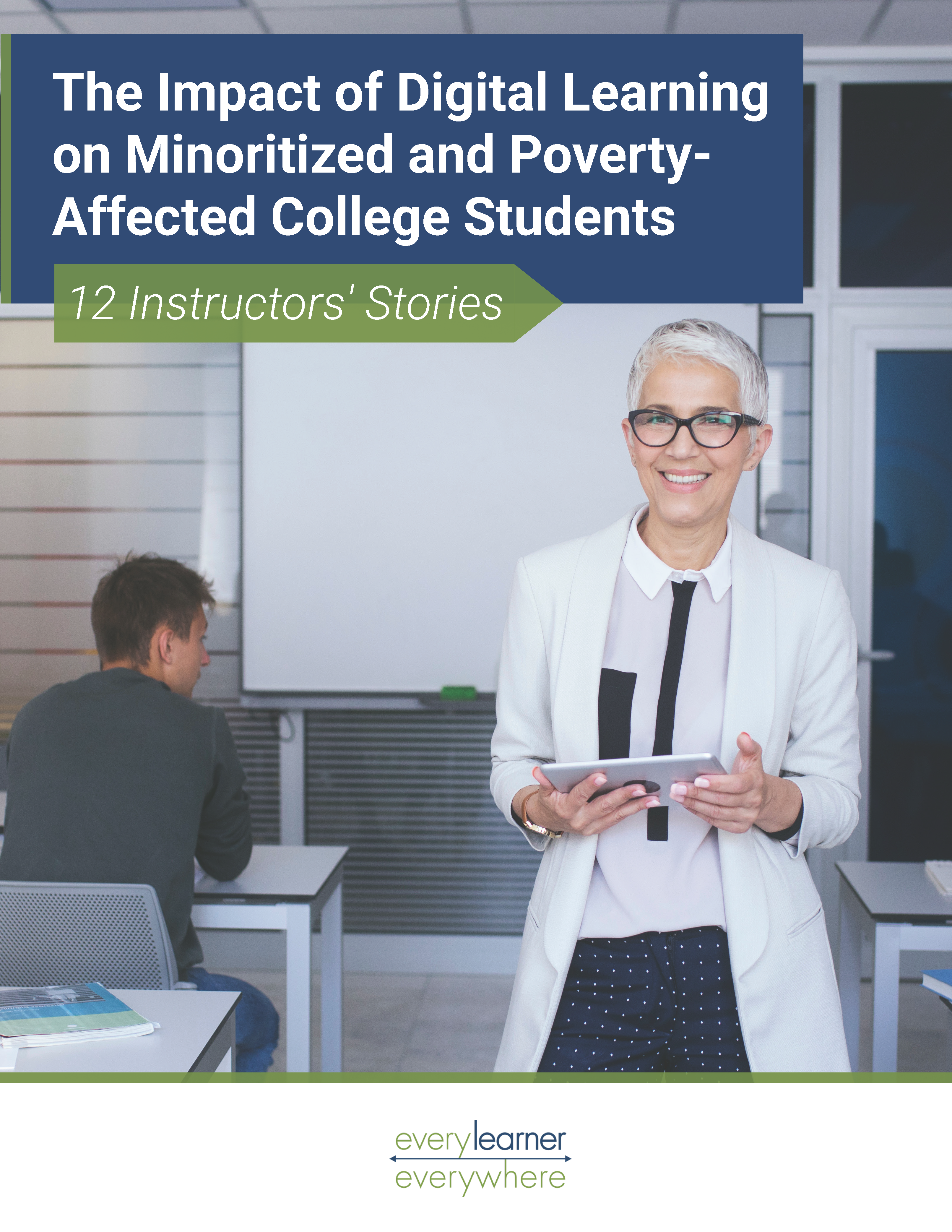
In this new resource, 12 instructors from a variety of two-year and four-year institutions share their experiences adopting digital learning tools to promote equity and improve learning outcomes for historically marginalized and under-resourced students. Their narratives highlight successes as well as bumps in the road as they implemented digital learning tools into their teaching.
abril 2023
The focus of this resource paper is to assess the effectiveness of digital learning in decreasing equity gaps as well as the impact digital learning has on specific student populations: those who identify as Black, Latino, and Indigenous; students from low-income backgrounds; and first-generation students.
Other Related Resources
enero 2026
This report offers a student-centered examination of generative AI in higher education—not a guide or endorsement, but a record of genuine student inquiry into AI’s potential and limitations. Students are already using AI, regardless of institutional policies. This student research helps faculty understand not just what tools students are using, but how they’re thinking about AI’s role in their education.