Every Learner Everywhere
DETA
WCET
Part of
Archived Resources
Archived Resource

DETA Research Toolkit 2.0

DecorativeThe DETA Research Toolkit 2.0 provides an array of new resources and tools such as emerging areas to help research move beyond the traditional paradigms of positivistic research, to bridge paradigms, and to explore innovative methodologies. The primary goal of the toolkit is to facilitate cross-institutional research and to serve as a catalyst for research across the country by providing access to research methods, instrumentation, and other tools.

The DETA Research Toolkit 1.0 provided a general research model and framework of inquiry to guide our research from a systems perspective. It also included a series of outcomes incorporating various national efforts to help researchers and practitioners identify areas where we should be documenting impact and moving the needle.

Download DETA Research Toolkit 2.0

This resource has been archived and may not be fully accessible to WCAG 2.1 standards. If you need an accessible version of this document, please fill out our Every Learner Accessibility Request Form.

Recommended citation:

Joosten, T., Cusatis, R., Harness, L., Billig, A., Wandrey, R., Knott, J., Reddy, D., & Flemming, R. (2020, November 10) DETA Research Toolkit 2.0, The National Research Center for Distance Education and Technological Advancements (DETA), WCET – the WICHE Cooperative for Educational Technologies, and Every Learner Everywhere®. https://detaresearch.org/research-support/research-toolkit-2/

Other Related Resources

Pillar Resource
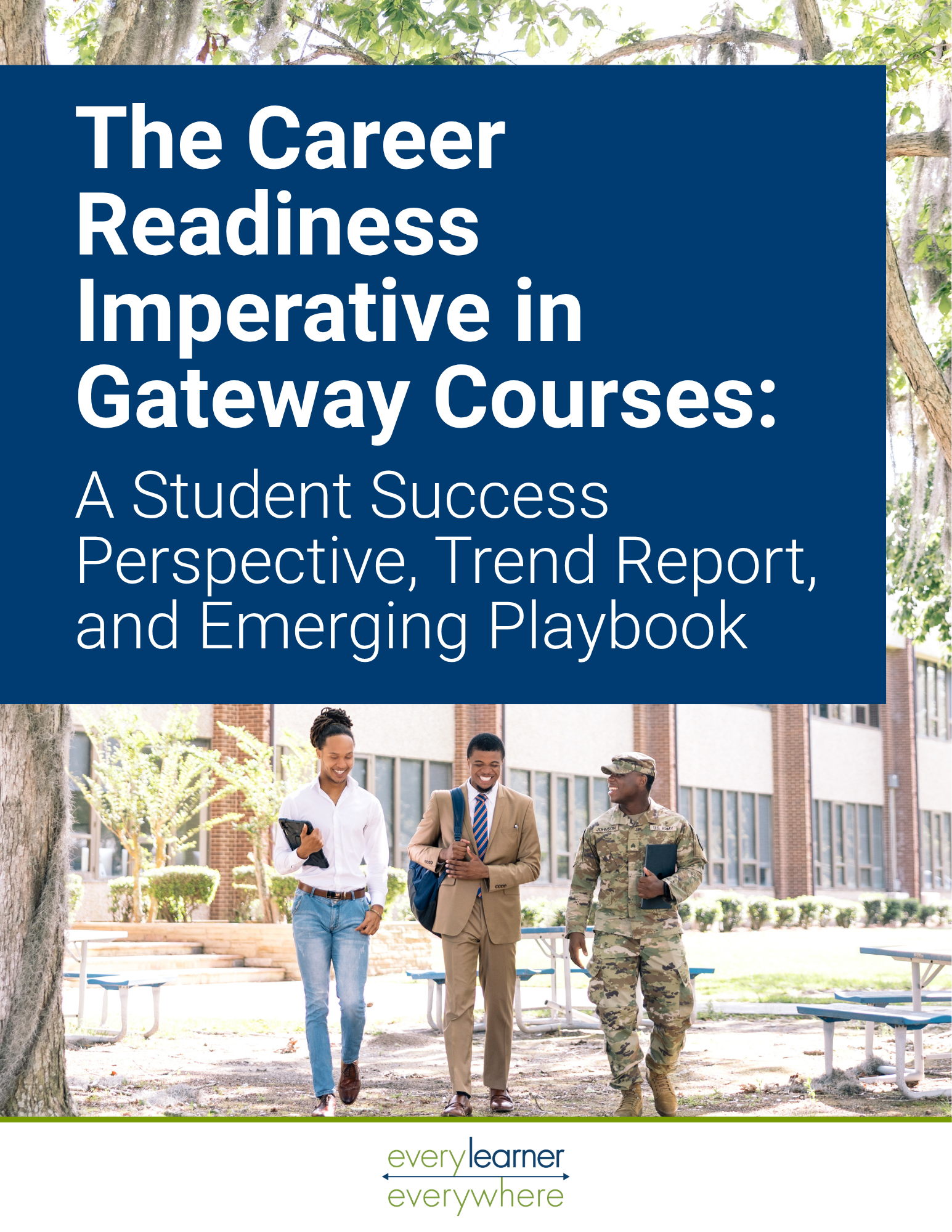
Three college students walk on a campus path in front of a brick building, one in casual attire with a tablet, another in a suit with a backpack, and the third in military uniform carrying a folder. Image depicts the career readiness imperative.

abril 2026

This resource examines the growing trend of U.S. colleges and universities integrating career readiness into academic courses, with particular attention to gateway and general education courses early in degree programs. It focuses on how students experience the relevance of what they learn in these early courses, and it provides strategies institutions can use to help students experience that relevance earlier, more explicitly, and more consistently.

Resource Cover page from The IIRP Graduate School's Course Design for Student Success Rubric with title, photo of student holding tablet and org logos.

marzo 2026

The IIRP Graduate School’s Course Design for Student Success Rubric, is a robust rubric, designed to support student engagement, access, and success across varied learner populations and institutions, including undergraduate, graduate, 2-year, etc. We want to inspire faculty, instructional designers, and administrators along their path of continual improvement.

Pillar Resource
COVER page of Student Research Into How Students and Faculty Use AI- Insights for Teaching and Learning with title and photo and every learner everywhere logo.

enero 2026

This report offers a student-centered examination of generative AI in higher education—not a guide or endorsement, but a record of genuine student inquiry into AI’s potential and limitations. Students are already using AI, regardless of institutional policies. This student research helps faculty understand not just what tools students are using, but how they’re thinking about AI’s role in their education.