

Every Learner Everywhere
Online Learning Consortium

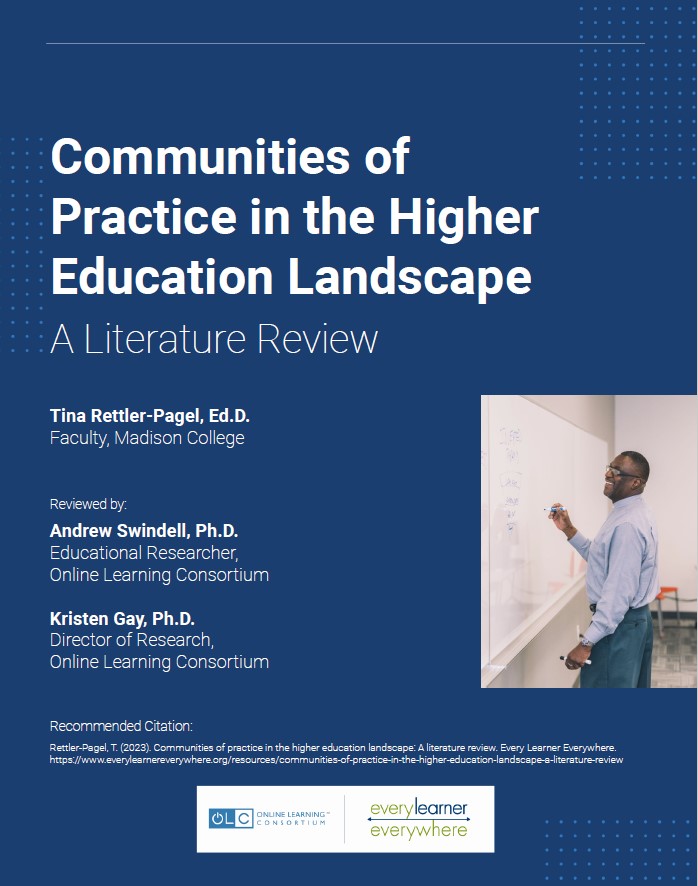
Communities of Practice in the Higher Education Landscape: A Literature Review

Communities of Practice (CoPs) are self-managed groups of people who have chosen to connect through a shared interest to learn reciprocally to improve their practice or craft (Lave & Wenger, 1991; Wenger, 1998; Mercieca, 2017). Over time, these groups build a collegial relationship, through which they share experiences and ideas that nurture the group’s passion for the topic(s) at hand and develop a “repertoire of communal resources” (Wenger, 1998). CoPs are growing in recognition and importance as a framework for shared exploration of topics of interest as a model for professional development within the higher education landscape (Tight, 2015).

While CoPs exist within many different types of organizations and for many variations of employee roles and types, this literature review explores the multiple dimensions of CoP, including the history, growth over time, current trends, evidence of best practices, and their significance to the field. In particular, the scope of the literature review focuses on the use and practices of CoPs within online, blended, and digital learning spaces.

Download the Communities of Practice in the Higher Education Landscape Literature Review

See also the companion resource: Communities of Practice in Higher Education: A Playbook for Centering Equity, Digital Learning, and Continuous Improvement


Recommended citation:

Rettler-Pagel, T. (2023). Communities of practice in the higher education landscape: A literature review. Every Learner Everywhere®. https://www.everylearnereverywhere.org/resources/communities-of-practice-in-the-higher-education-landscape-a-literature-review/


Other Related Resources

Pillar Resource

noviembre 2026

This new playbook gives faculty practical strategies for supporting student agency, so students can build the judgment to make informed choices about AI in their own learning. Whether your course welcomes AI, limits it, or does some of each, the playbook shows how clear, intentional choices can lower student anxiety, build trust, and support real learning.

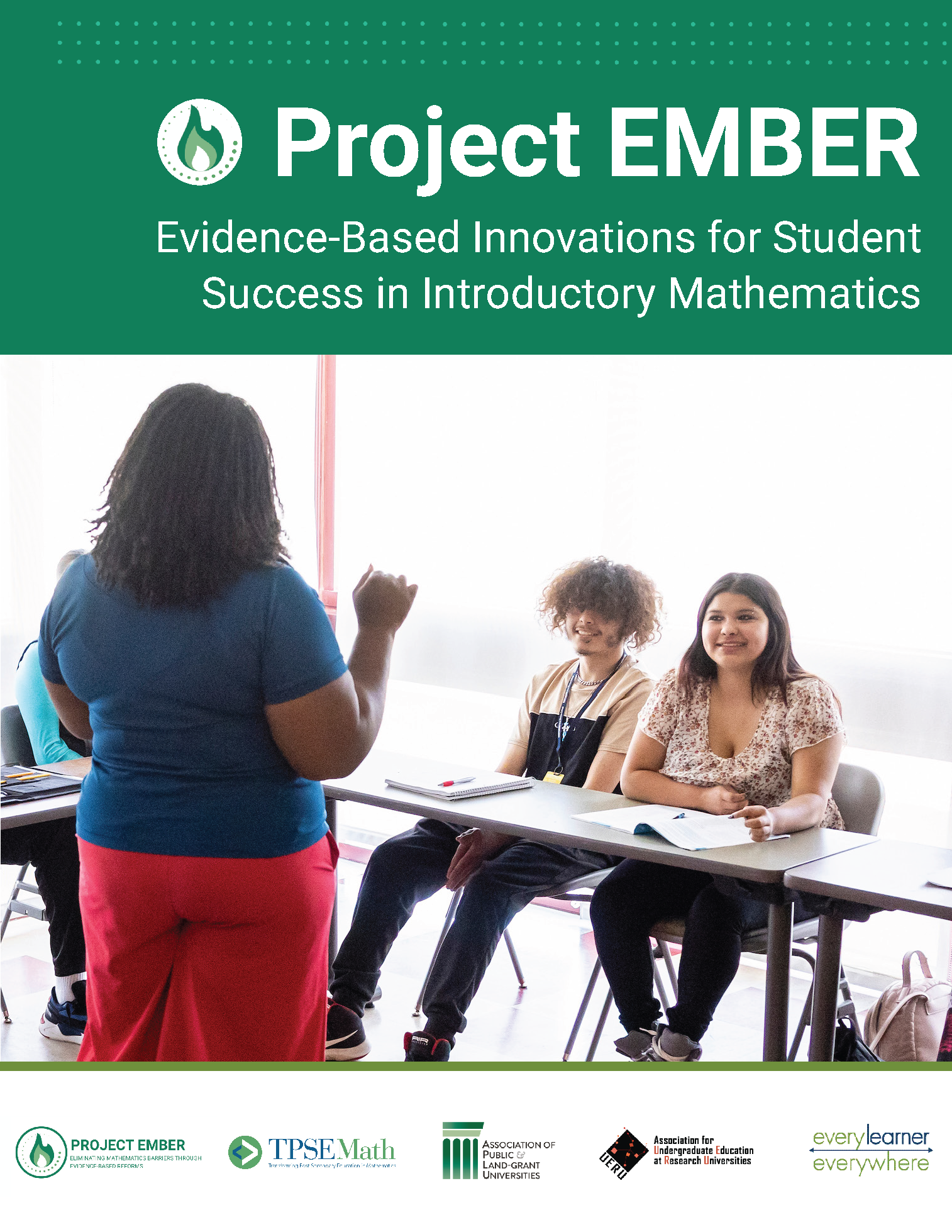
COVER Evidence-Based Innovations for Student Success in Introductory Mathematics with title, photo of faculty standing in front of students learning in class.

septiembre 2026

Evidence-Based Innovations for Student Success in Introductory Mathematics is designed to help teaching-focused faculty, course coordinators, and department and institutional leaders answer a practical question: which reforms should we try? This resource covers eight evidence-based innovations: active pedagogy, course coordination, math pathways, corequisite supports, tech-enabled instruction, alternative grading, using data in decision-making, and identity and belonging.

Pillar Resource

agosto 2026

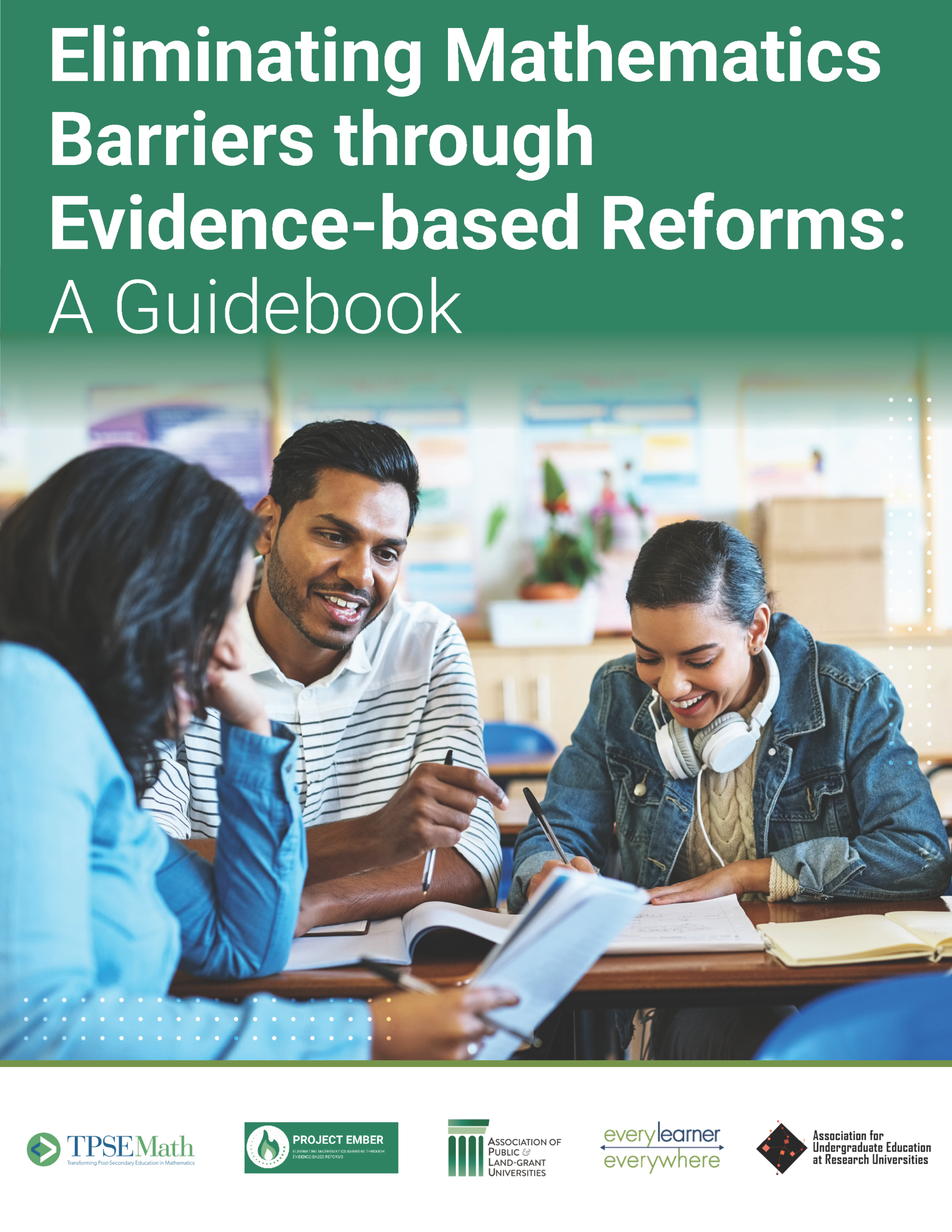
This guidebook gives your institution a clear, practical roadmap for transforming introductory mathematics, from first conversations to lasting, systemic change. This isn’t a theoretical framework. It’s a field-tested, action-oriented resource grounded in real research and real institutional experience, designed to help your team move from “we know something needs to change” to “here’s our plan, and here’s who’s doing what.”