
 Ver todas las publicaciones




Introductory mathematics sits at the center of many of higher education’s most persistent challenges: student momentum, retention, and timely progress into majors. Institutions know these courses matter, yet efforts to improve them often stall, because change requires coordination, shared direction, and sustained support across roles.
A new guidebook from Project EMBER (Eliminating Mathematics Barriers Through Evidence-Based Reforms) offers a practical way into that work. Written for departments and institutions seeking to improve introductory math programs, the Eliminating Mathematics Barriers through Evidence-based Reforms: A Guidebook focuses on helping teams organize themselves for effective, evidence-informed change. The guidebook centers the role of teaching-focused faculty — who coordinate and teach many introductory math courses — while emphasizing the importance of cross-functional collaboration, shared vision, and strategic planning. The guidebook also includes practical self-assessment rubrics, examples of cross-functional team structures, and a detailed case study showing how one institution translated reflection into an actionable, multi-year improvement plan.
The guidebook begins by framing program improvements as a structured process with three milestones that help departments move from reflection to action: assembling and empowering a cross-functional team, assessing current practices using a shared self-assessment tool, and planning for transformation in ways that align with institutional priorities. Together, these milestones offer a coherent starting point for departments ready to take a hard look at their introductory mathematics programs and decide, collectively, where to focus next.
The material below is excerpted from the three milestones framework section of the Eliminating Mathematics Barriers through Evidence-based Reforms: A Guidebook and lightly edited for this context.
Milestone 1: Assembling and empowering the cross-functional team
A cross-functional team needs to be established and empowered to engage in positive, sustained change in introductory mathematics. As this work focuses on introductory mathematics, recognizing and empowering individuals who are in teaching-focused roles for those courses will be critical.
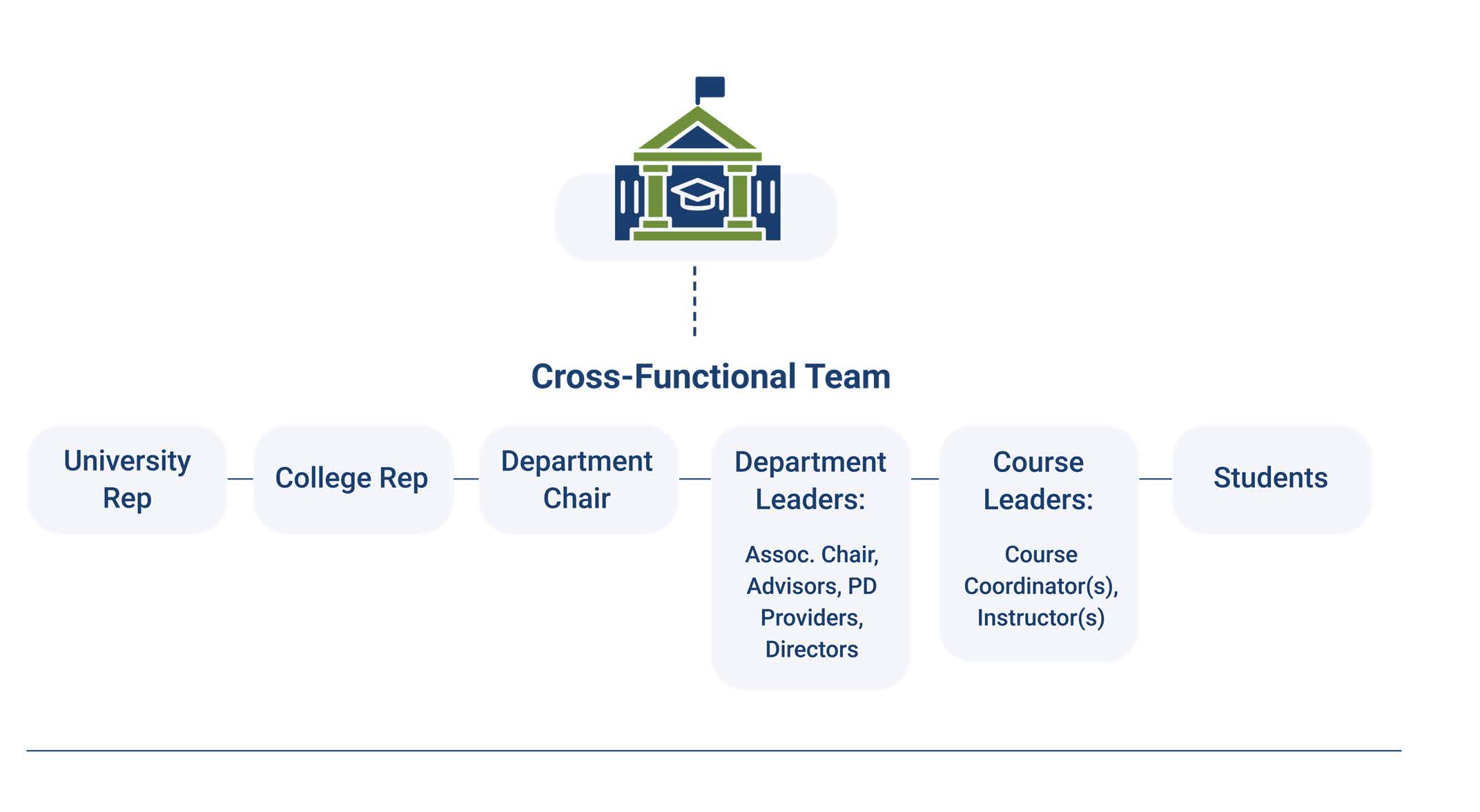
Figure 1. Potential cross-functional team membership.
Establishing norms
It is important for a team to have shared ways of working collaboratively (team norms) and methods of transparency and communication to key stakeholders (communication norms).
Visioning for introductory mathematics
A driver of sustained and effective change in introductory mathematics is a shared vision among the team members that provides direction, fosters collective ownership, and serves as a touchstone for continuous improvement. Using the results from an initial brainstorm, the team will collaboratively draft a vision statement to share with the department and other stakeholders.
Professional learning: Becoming a change agent
Transforming introductory mathematics will involve systemic change that will need to be sustained over time. Team members need to take on the role of change agents within their institution, coordinating with relevant university stakeholders, and they may need professional learning in order to engage in this work.
Milestone 2: Assessing current practices
The self-assessment process creates opportunities for a team to engage in rich discussions about their introductory mathematics program. This process involves a tool that helps a team identify the areas where an introductory mathematics program is succeeding and where the program can be improved.
The Self-Assessment Tool
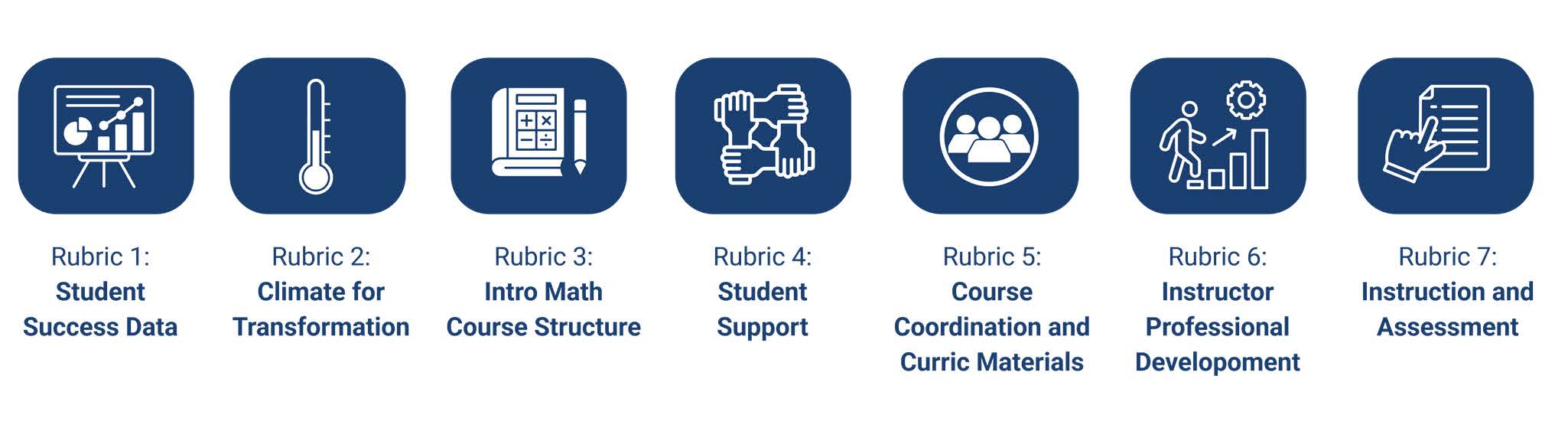
The cross-functional team (or some subset of the cross-functional team) will complete the Self-Assessment Tool discussed in more detail in the Assessing Current Practices section of the guidebook. The tool contains seven rubrics which assess the current landscape of introductory mathematics:
Collecting additional relevant data
Beyond the data collected through the rubrics in the Self-Assessment Tool, additional data may be relevant for teams to collect (e.g., placement, course success, retention, course throughput, etc.). Data provide information about the local context, helping inform the narrative around introductory mathematics.
Creating a wish list
The self-assessment process will illuminate ideas for change the team may want to capture in a wish list. This wish list will guide the cross-functional team as they consider innovations to implement in their introductory mathematics program.
Milestone 3: Planning for transformation
Once the self-assessment process is complete, the cross-functional team will be positioned to craft an action plan for enacting positive change in introductory mathematics. Because introductory mathematics impacts institutions broadly, playing some role in most programs and majors, the development of an action plan should involve the cross-functional team. In addition, the authors highly recommend making sure efforts align with an institution’s strategic plan. When change initiatives are aligned with institutional priorities, administrators are better positioned to allocate resources and elevate the work.
Actioning the vision: Creating an action plan
Once the team identifies the goal(s) they want to focus their efforts on, they need to identify which innovation(s) they can adapt to their local context. Project EMBER has identified five potential areas of innovation that could serve as a hub for creating an action plan. Once an area of innovation is selected, the cross-functional team will map out short-term goals, long-term goals, and immediate next steps to work toward actioning the vision and implementing the innovation(s).
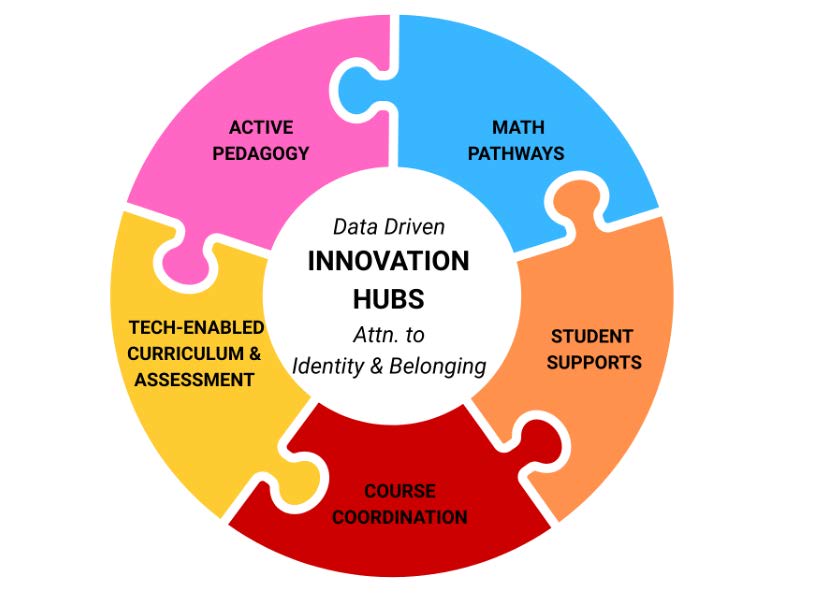
Figure 2. Project EMBER’s evidence-based areas of innovation.
Assembling the implementation team
Once the action plan is developed, the cross-functional team will be encouraged to seek out change agents who will help enact the planned innovation. These change agents can be internal or external. The membership of the implementation team will depend on the context and innovation selected for the action plan.
Professional learning: Learning how to enact innovation
It is important to carry out the action plan in a way that leads to sustained transformation. The team might consider engaging in professional learning to support the development of transformation leaders who can inspire and lead positive change within the department (or campus unit) and the institution.
Building and empowering teams for math education reform
Across institutions, the challenge of improving student success in introductory math courses is often how to begin in a way that is coordinated, evidence informed, and sustainable. For teaching-focused faculty and departmental leaders, the value of this approach is not just clarity about what to change, but a shared process for deciding where to start and how to sustain momentum. Readers following these milestones will appreciate the concrete tools, examples, and resources included in the rest of the guidebook.
Download the guidebook