Every Learner Everywhere
Tyton Partners
Part of
Archived Resources
Archived Resource

ASU Remote 2020: The Future of Learning: Every Learner Everywhere®, Any Time?

This spring, higher education institutions engaged in a massive and rapid transition to remote learning that exposed a new cadre of faculty with no prior online teaching experience to the use of digital learning techniques. On behalf of the Every Learner Everywhere® Network, we surveyed almost 5,000 faculty who worked to transition a course from face-to-face to a remote format to understand the experience, challenges, and lessons moving forward. While the institutional response to the pandemic was at times disorganized, our findings paint a picture of a flexible professoriate readily adapting to change and keenly focused on its students’ best interests. This transition left faculty with a more positive perception of online learning; but key challenges moving forward include instructor and institutional readiness, inconsistent student experience, gaps in student access and readiness, and in institutions’ ability to fill in those gaps.

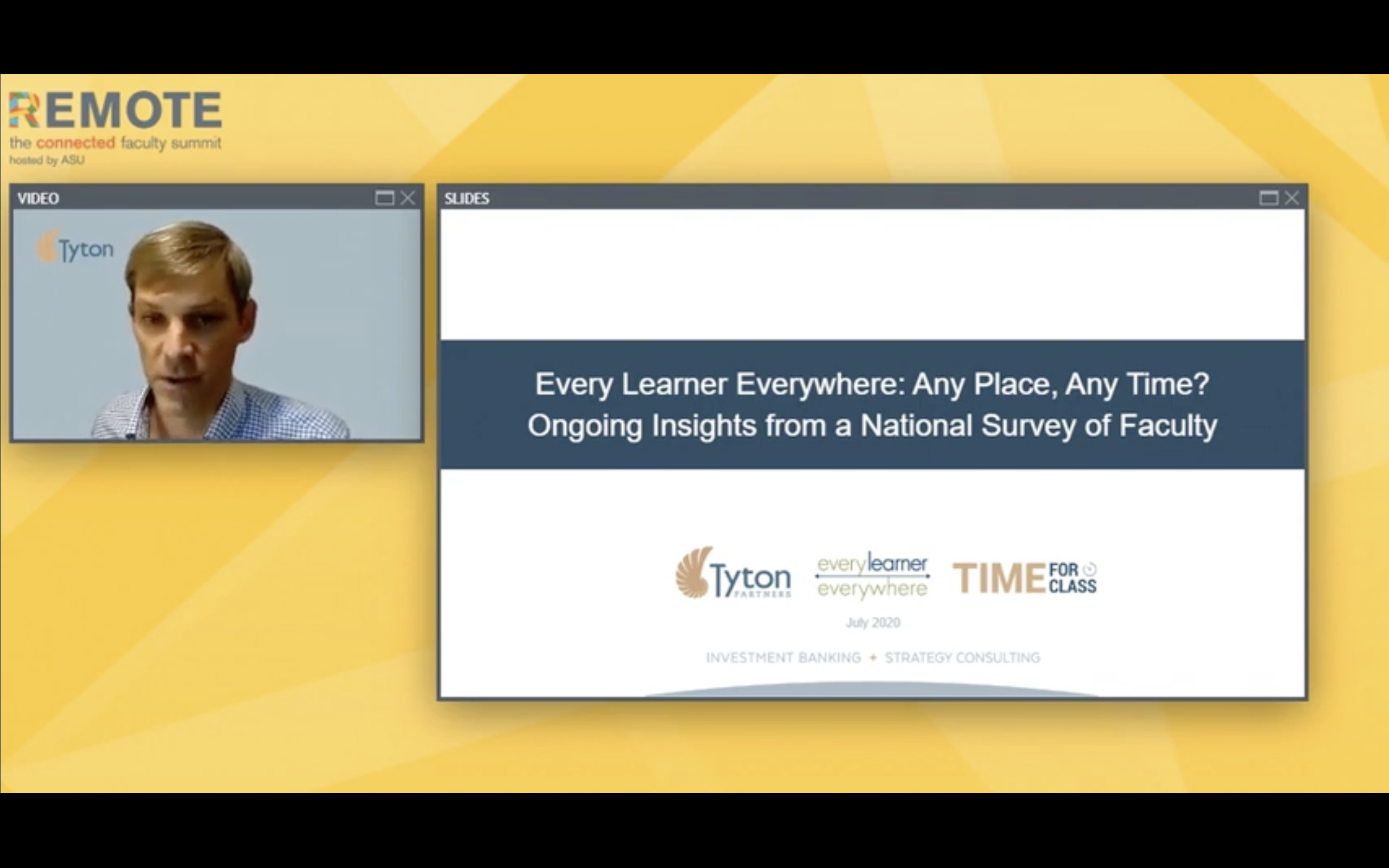
Gates Bryant of Tyton Partners, Kristen Fox of Tyton Partners and Consultant, Alan Drimmer discuss recent findings in a survey of faculty teaching remotely during the Covid pandemic.

This video is from the Remote Summit 2020.

DecorativeThis resource has been archived and may not be fully accessible to WCAG 2.1 standards. If you need an accessible version of this video or a transcript, please fill out our Every Learner Accessibility Request Form.

Recommended citation:

Gates Bryant, G., Fox, K. and Drimmer, A. (2020, July 13) The Future of Learning: Every Learner Everywhere®, Any Time? [Video] ASU Remote Summit.


Other Related Resources

Pillar Resource

noviembre 2026

This new playbook gives faculty practical strategies for supporting student agency, so students can build the judgment to make informed choices about AI in their own learning. Whether your course welcomes AI, limits it, or does some of each, the playbook shows how clear, intentional choices can lower student anxiety, build trust, and support real learning.

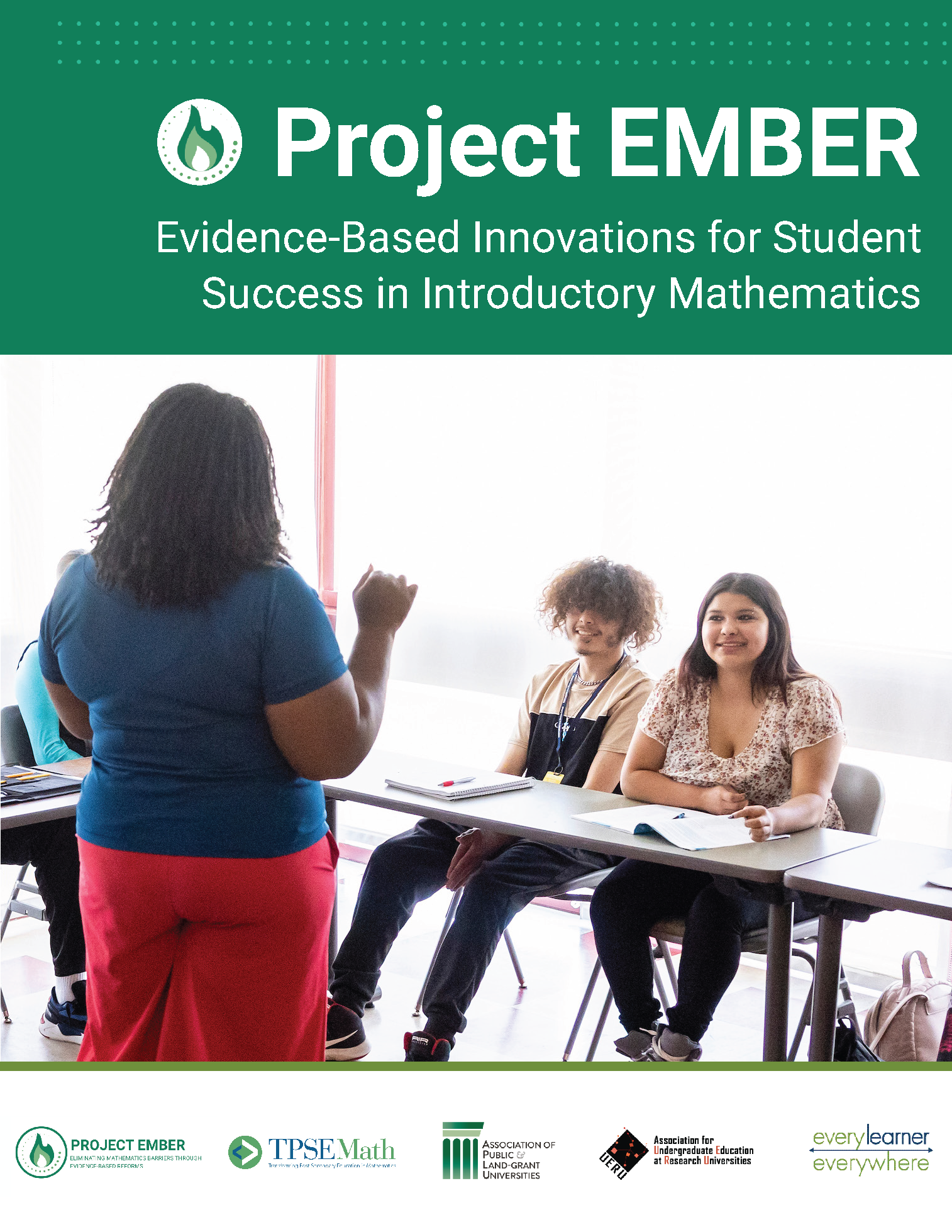
COVER Evidence-Based Innovations for Student Success in Introductory Mathematics with title, photo of faculty standing in front of students learning in class.

septiembre 2026

Evidence-Based Innovations for Student Success in Introductory Mathematics is designed to help teaching-focused faculty, course coordinators, and department and institutional leaders answer a practical question: which reforms should we try? This resource covers eight evidence-based innovations: active pedagogy, course coordination, math pathways, corequisite supports, tech-enabled instruction, alternative grading, using data in decision-making, and identity and belonging.

Pillar Resource

agosto 2026

This guidebook gives your institution a clear, practical roadmap for transforming introductory mathematics, from first conversations to lasting, systemic change. This isn’t a theoretical framework. It’s a field-tested, action-oriented resource grounded in real research and real institutional experience, designed to help your team move from “we know something needs to change” to “here’s our plan, and here’s who’s doing what.”