Every Learner Everywhere

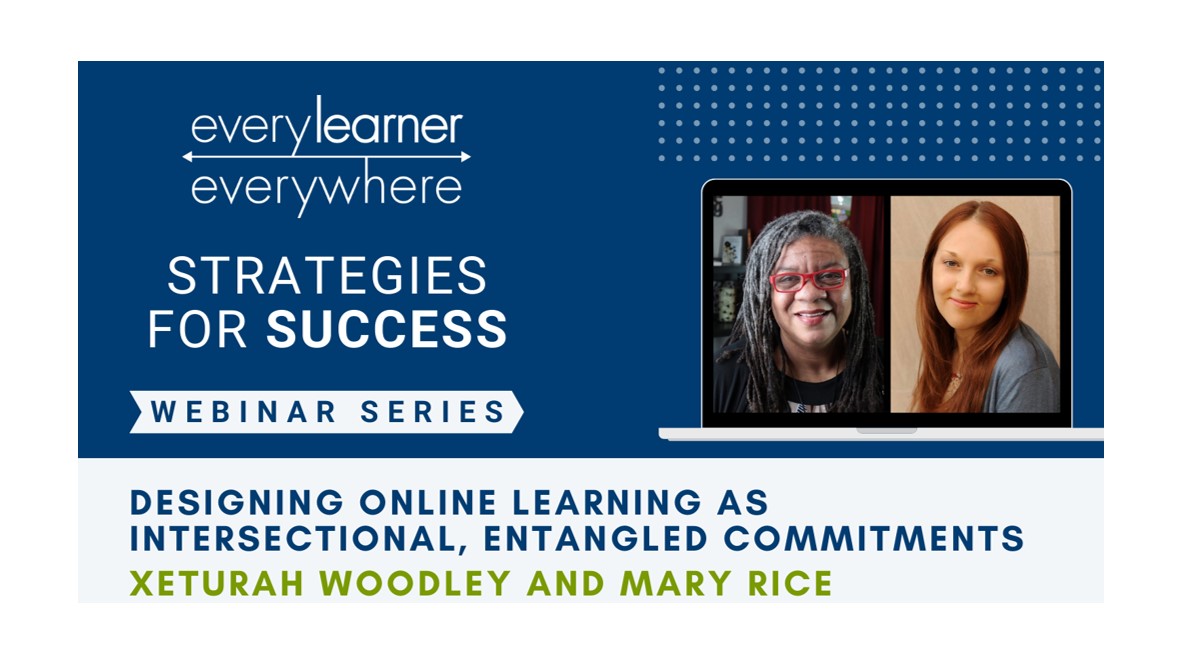
Designing Online Learning as Intersectional, Entangled Commitments

In this final of four Strategies for Success webinars, Dr. Mary Rice and Dr. Xeturah Woodley engage in a conversation about the renewal that emerges alongside intersectional online course design. The presenters will interrogate existing notions of course design that create an unsustainable rivalry between teaching and learning. By shifting our ways of knowing and being about online course design we are better able to create inclusive environments that simultaneously value the being and doing of learning and teaching.

View recording without audio description View recording with audio description View Transcript

Dr. Xeturah Woodley is the Vice President for Academic Affairs at New Mexico State University – Dona Ana Community College. At NMSU DACC, she is also a tenured Education Professor in the Arts, Humanities, and Social Sciences Division.  Her research, teaching, and service weave together Black womanist thought, critical race theory, and social justice praxis as she interrogates the inherent biases that plague American higher education. Dr. Woodley’s research interests include womanism, social justice issues in higher education, and critical pedagogies in online education.

Dr. Mary Rice is an Assistant Professor of Literacy for the College of Education and Human Sciences at the University of New Mexico in Albuquerque. She is a former classroom teacher of English language arts, ESL, and reading support. She has been involved with K-12 distance, online, and blended learning since 2013 as a researcher, evaluator, teacher, and teacher educator. Mary’s research focuses on the relational aspects of designing, delivering, and doing of inclusive and accessible online learning among educators, parents, and students. Mary has worked with individuals in online learning in most U.S. states and several countries. She was named an Emerging Scholar by the Online Learning Consortium in 2018 and has been honored with awards from organizations such as the American Educational Research
Recommended citation:

Woodley, X. & Rice, M. (2023) Designing Online Learning as Intersectional, Entangled Commitments [Video] Every Learner Everywhere®. https://www.everylearnereverywhere.org/resources/designing-online-learning-as-intersectional-entangled-commitments/

Other Related Resources

Pillar Resource
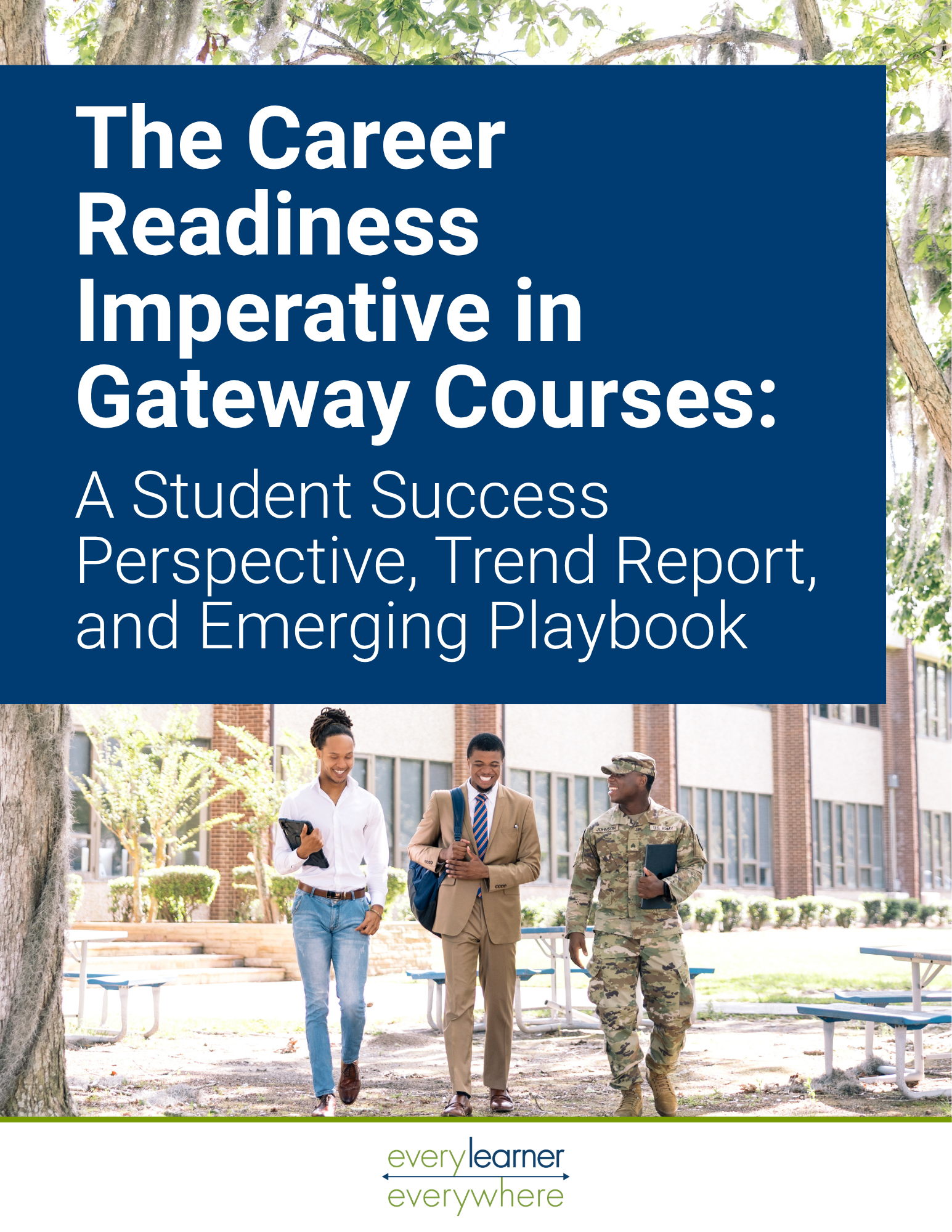
Three college students walk on a campus path in front of a brick building, one in casual attire with a tablet, another in a suit with a backpack, and the third in military uniform carrying a folder. Image depicts the career readiness imperative.

abril 2026

This resource examines the growing trend of U.S. colleges and universities integrating career readiness into academic courses, with particular attention to gateway and general education courses early in degree programs. It focuses on how students experience the relevance of what they learn in these early courses, and it provides strategies institutions can use to help students experience that relevance earlier, more explicitly, and more consistently.

Resource Cover page from The IIRP Graduate School's Course Design for Student Success Rubric with title, photo of student holding tablet and org logos.

marzo 2026

The IIRP Graduate School’s Course Design for Student Success Rubric, is a robust rubric, designed to support student engagement, access, and success across varied learner populations and institutions, including undergraduate, graduate, 2-year, etc. We want to inspire faculty, instructional designers, and administrators along their path of continual improvement.

Pillar Resource
COVER page of Student Research Into How Students and Faculty Use AI- Insights for Teaching and Learning with title and photo and every learner everywhere logo.

enero 2026

This report offers a student-centered examination of generative AI in higher education—not a guide or endorsement, but a record of genuine student inquiry into AI’s potential and limitations. Students are already using AI, regardless of institutional policies. This student research helps faculty understand not just what tools students are using, but how they’re thinking about AI’s role in their education.