Every Learner Everywhere
Online Learning Consortium
DETA

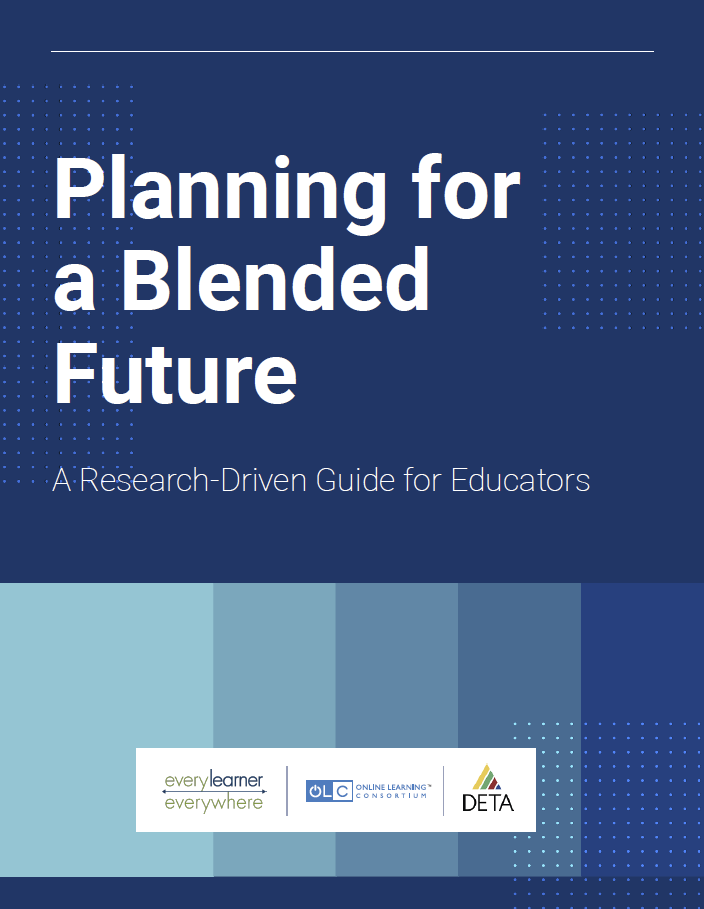
Planning for a Blended Future

A Research-Driven Guide for Educators

While many of us through the years have experienced and witnessed the potential of blended (or hybrid) learning in the future of postsecondary education, the promise has never been more realized than in the world’s response to a global pandemic and the urgency for academic continuity through emergency remote instruction that required online learning technologies to mix or replace students’ onsite experience with a new online experience. Educators persevered through a global pandemic, a collective trauma of our lives, learning more than ever the weaknesses of technology, the strengths of togetherness, and the need for thoughtful and inclusive strategic planning. While the challenge, disappointment, and devastation is not without note, the possibilities for the strategic transformation of the future of higher education through blended learning are abundant. By thoughtfully and strategically considering design and technologies to create meaningful connectedness across distance through active learning pedagogies, real learning can be achieved.

Conceptualizing what blended learning (hybrid learning) looks like on your campus is an important step in ensuring quality learning for your students. Identifying a blended model for your courses and programs that is derived from research-based, effective practices with documented improvement of student outcomes is critical. Since many of you have had to quickly launch technology-driven blended options, it is time to strategically plan for a blended model for your campus, programs, and courses. Planning for a Blended Future: A Research-Driven Guide for Educators identifies factors and techniques to be considered for responsive planning and redesigning of courses and programs for post-inoculation education in institutions of higher education.

This guide moves beyond getting started with blended learning to help educators realize the best of online and onsite instruction and implement research-driven techniques to positively influence student outcomes.

Download Guide
Recommended Citation:

Joosten, T., Weber, N., Baker, M., Schletzbaum, A., & McGuire, A. (2021). Planning for a Blended Future: A Research-Driven Guide for Educators. [Report] Every Learner Everywhere® Network. Retrieved from: https://www.everylearnereverywhere.org/resources/

Other Related Resources

Pillar Resource
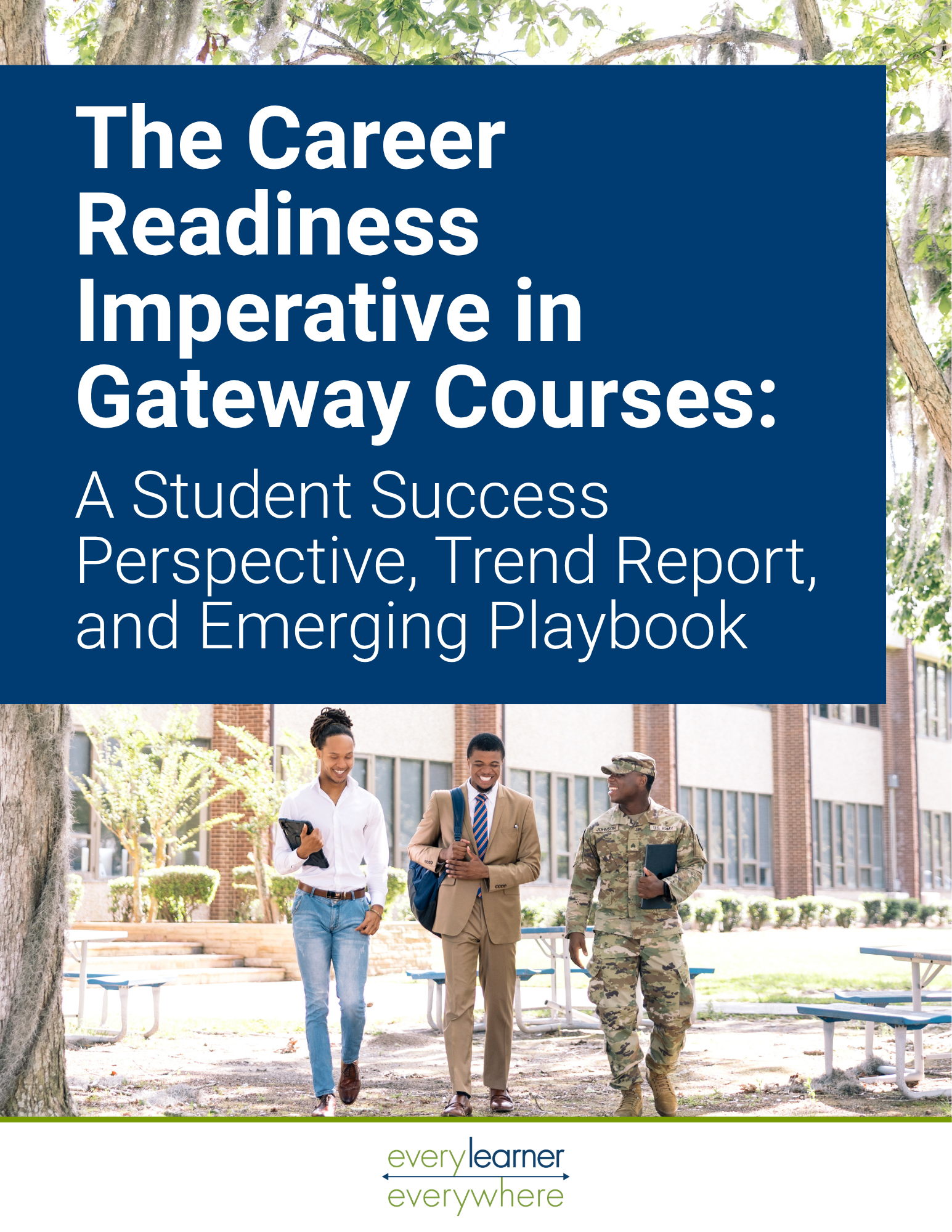
Three college students walk on a campus path in front of a brick building, one in casual attire with a tablet, another in a suit with a backpack, and the third in military uniform carrying a folder. Image depicts the career readiness imperative.

abril 2026

This resource examines the growing trend of U.S. colleges and universities integrating career readiness into academic courses, with particular attention to gateway and general education courses early in degree programs. It focuses on how students experience the relevance of what they learn in these early courses, and it provides strategies institutions can use to help students experience that relevance earlier, more explicitly, and more consistently.

Resource Cover page from The IIRP Graduate School's Course Design for Student Success Rubric with title, photo of student holding tablet and org logos.

marzo 2026

The IIRP Graduate School’s Course Design for Student Success Rubric, is a robust rubric, designed to support student engagement, access, and success across varied learner populations and institutions, including undergraduate, graduate, 2-year, etc. We want to inspire faculty, instructional designers, and administrators along their path of continual improvement.

Pillar Resource
COVER page of Student Research Into How Students and Faculty Use AI- Insights for Teaching and Learning with title and photo and every learner everywhere logo.

enero 2026

This report offers a student-centered examination of generative AI in higher education—not a guide or endorsement, but a record of genuine student inquiry into AI’s potential and limitations. Students are already using AI, regardless of institutional policies. This student research helps faculty understand not just what tools students are using, but how they’re thinking about AI’s role in their education.