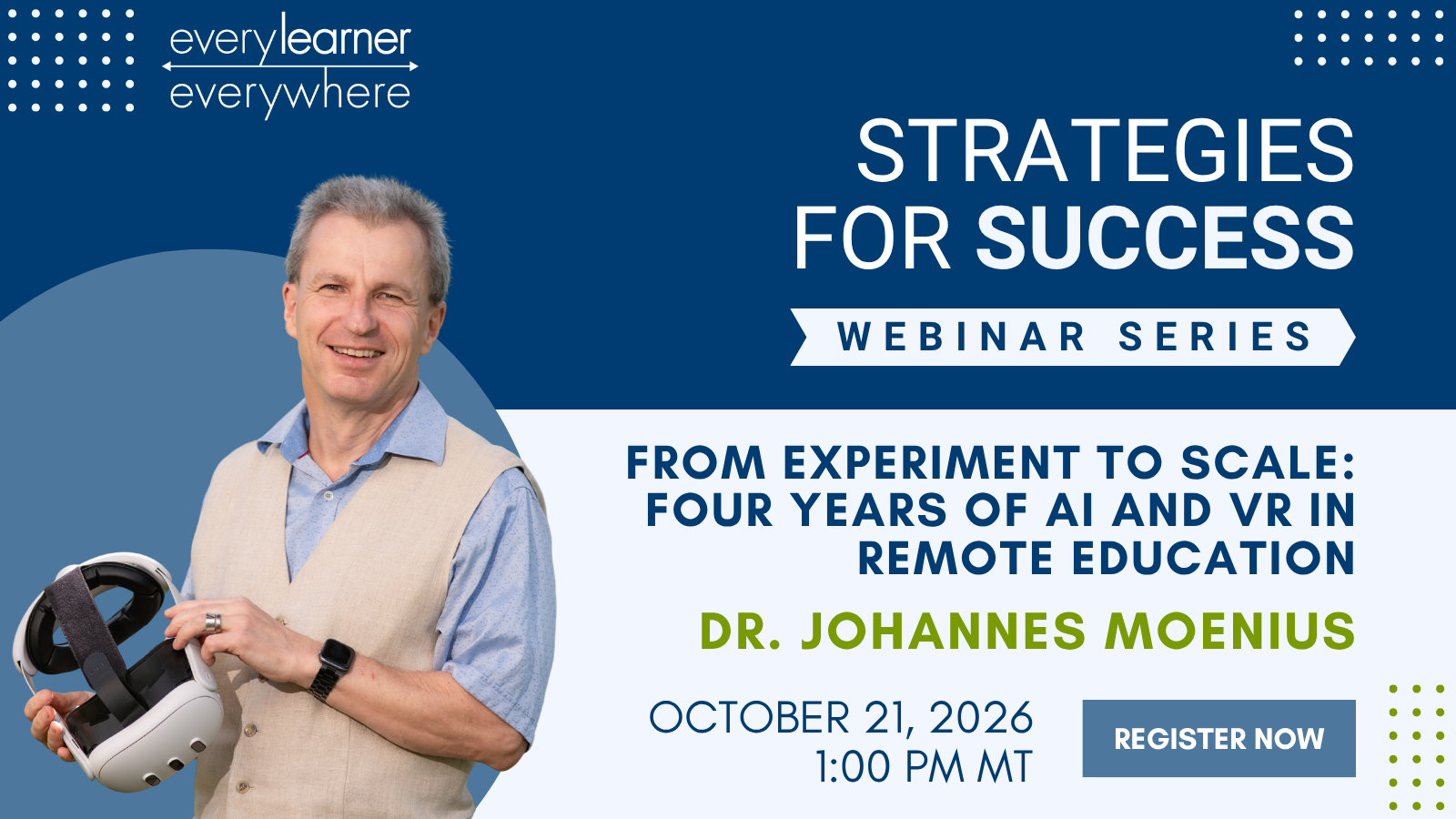
From Experiment to Scale: Four Years of AI and VR in Remote Education
- October 21, 2026 | 1:00 PM MT
Artificial intelligence (AI) and virtual reality (VR) promise to transform teaching and learning, but their educational value depends critically on effective implementation. This challenge is particularly pronounced in remote education, where pedagogical and logistical constraints can limit emerging technologies. At the same time, combining AI and VR creates learning opportunities that few traditional approaches can replicate.
This webinar draws on four years of experimentation integrating AI and VR into the remote classroom. It traces how the original goals and pedagogical concepts evolved through repeated implementation and student feedback. Drawing on learning-outcome assessments and anonymous student surveys, I examine successes, challenges, and remaining questions and derive practical guidelines for educators. Notably, students overwhelmingly demand continued use of both technologies in future classrooms, with support even stronger for AI than for VR. The session concludes with lessons learned and plans for deploying AI- and VR-supported learning at scale.
Workshop Leaders
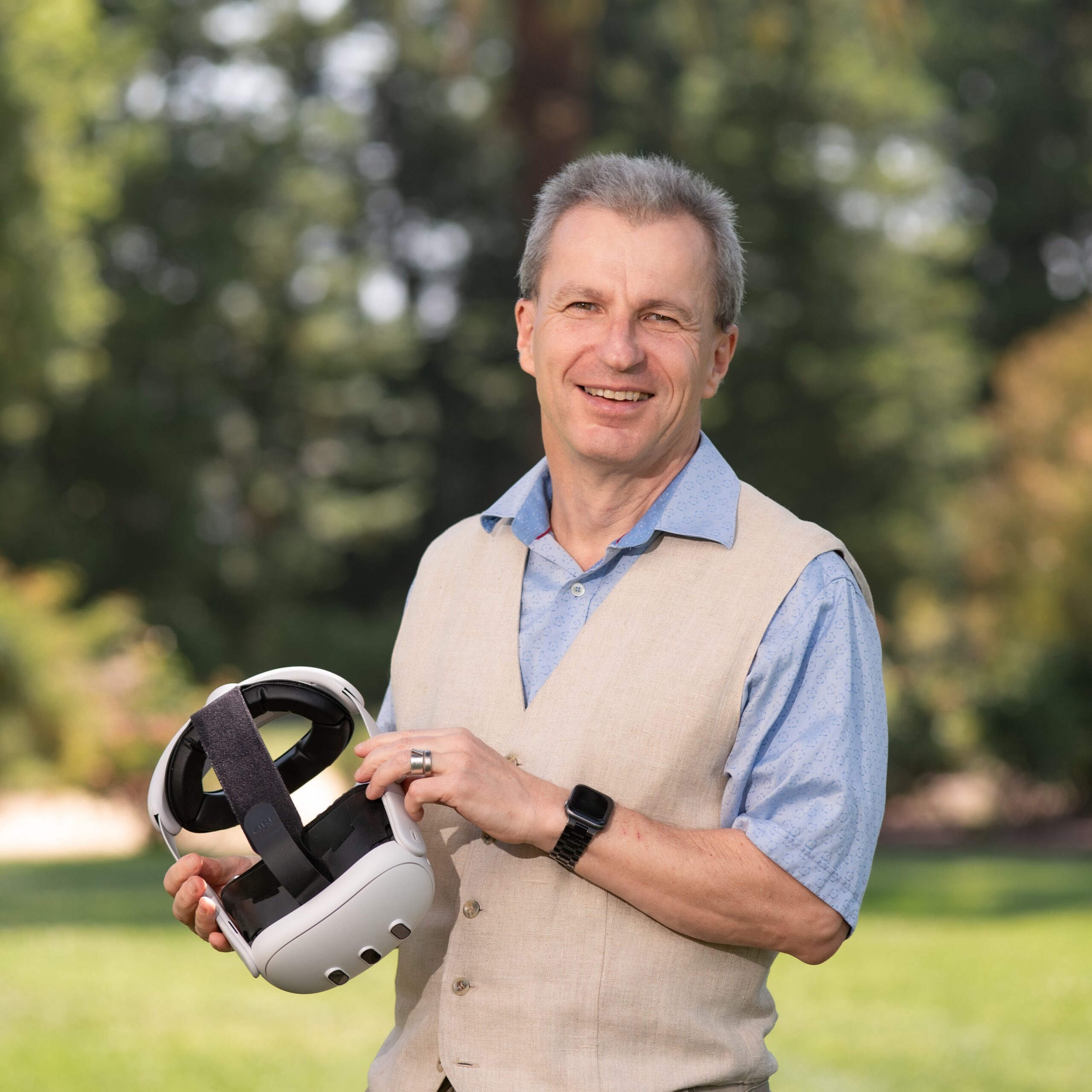
Dr. Johannes Moenius
Professor Emeritus at the University of Redlands