Every Learner Everywhere
Intentional Futures

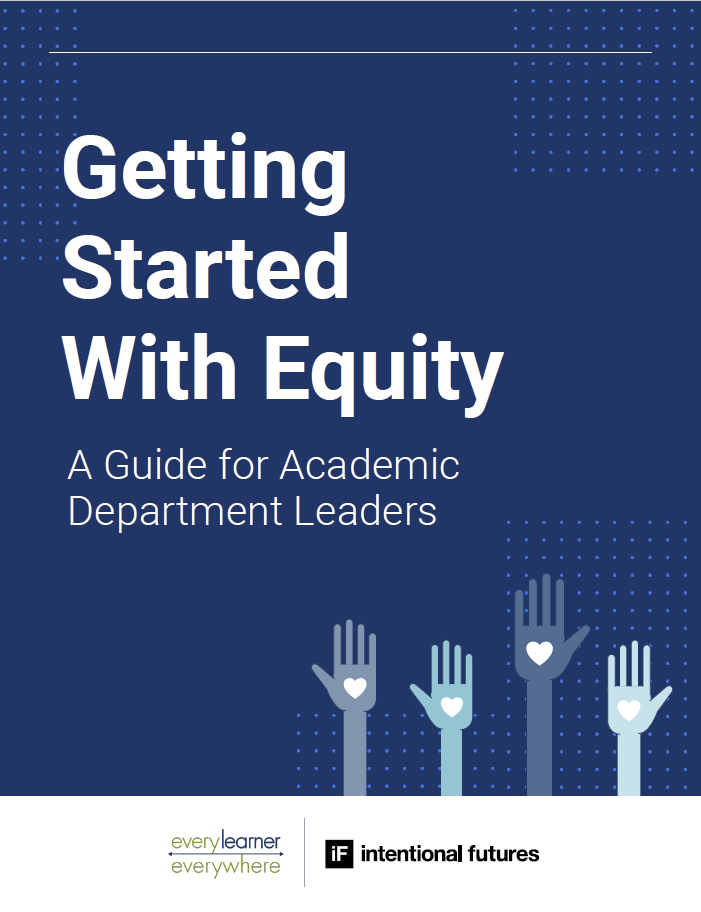
Getting Started with Equity: A Guide for Academic Department Leaders

Getting StartDownload Getting Started With Equityed With Equity: A Guide for Academic Department Leaders

Getting Started With Equity is a guide designed specifically for academic department leaders in higher education. The guide can help department chairs, course directors, and lead instructors develop and curate an educational environment that is simultaneously justice-centered and equity-advancing.

While the guide offers specific strategies faculty can adopt in the classroom and in curricular development, a systems approach to centering justice — in the interest of equity-advancing work — is the responsibility of the entire campus community, not just individual instructors making choices around their own teaching. Equity-advancing work demands a change in systems and culture, which is a collaborative effort, not an individual one. It calls for the demystification and deconstruction of systemic inequities. This work shapes policies, course offerings, assessments of learning, and curricular content. And finally, it supersedes checklists full of superficial changes.

Getting Started With Equity: A Guide for Academic Department Leaders is not a comprehensive handbook for educators committed to equity-advancing work; there are many worthwhile resources and tools that illuminate and recommend best practices for equity in higher education. Rather, Getting Started With Equity is a resource to start having conversations in academic departments around how we can work toward equity and justice in our curricula and teaching.


Companion resources
     A Discipline Brief for Equity in Mathematics: Natalie Hobson Cover    A Discipline Brief for Equity in Mathematics: Joel Amidon Cover    A Discipline Brief for Equity in Biology Cover

A Discipline Brief for Equity in Chemistry Cover    A Discipline Brief for Equity in Psychology Cover    A Discipline Brief for Equity in English Composition Cover     Getting Started with Equity in English Composition Cover


Recommended Citation:

Gable. T., Holiday, T., O’Sullivan, P., & Sims, J.J. (2021 June 1). Getting Started With Equity: A Guide for Academic Department Leaders. Every Learner Everywhere®. https://www.everylearnereverywhere.org/resources/.

Other Related Resources

Pillar Resource
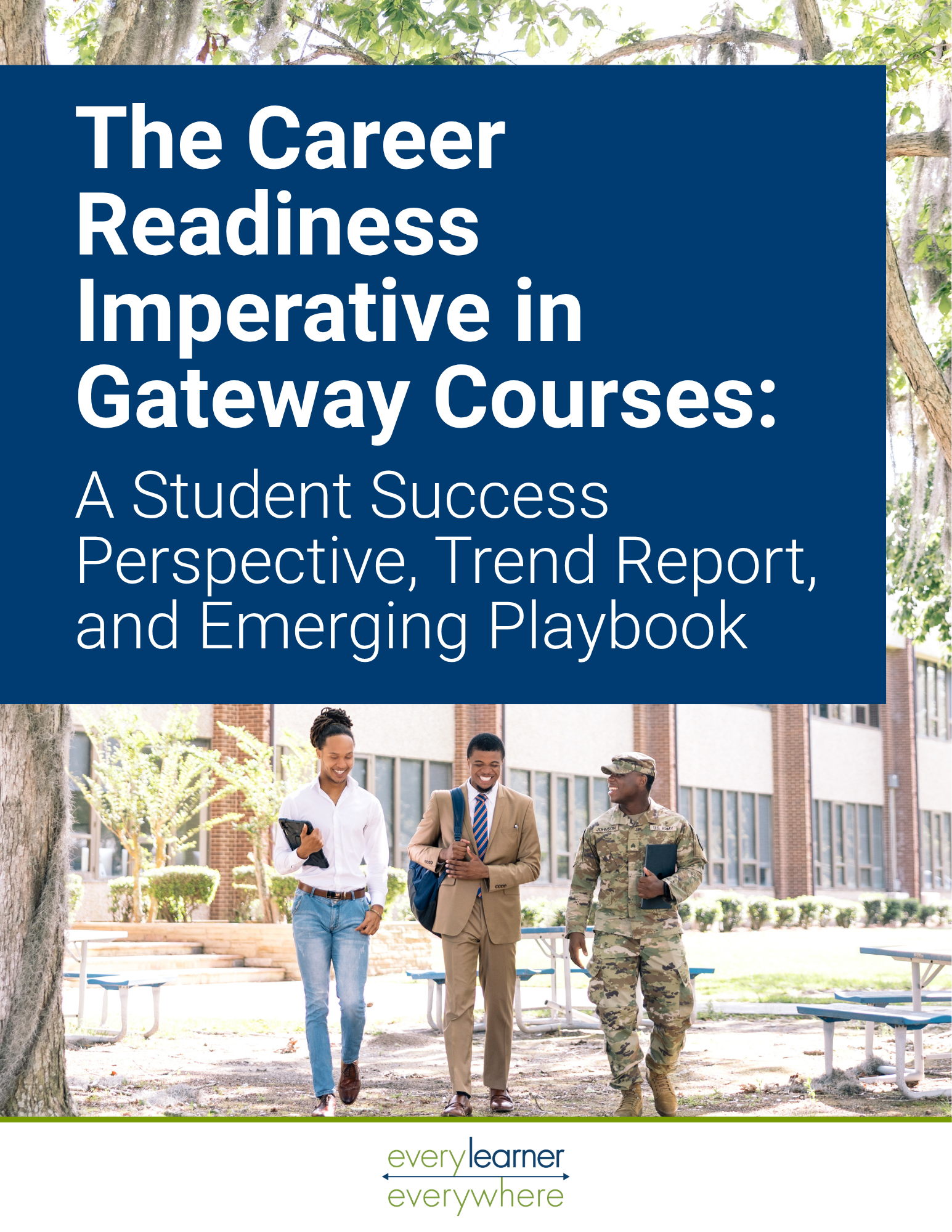
Three college students walk on a campus path in front of a brick building, one in casual attire with a tablet, another in a suit with a backpack, and the third in military uniform carrying a folder. Image depicts the career readiness imperative.

abril 2026

This resource examines the growing trend of U.S. colleges and universities integrating career readiness into academic courses, with particular attention to gateway and general education courses early in degree programs. It focuses on how students experience the relevance of what they learn in these early courses, and it provides strategies institutions can use to help students experience that relevance earlier, more explicitly, and more consistently.

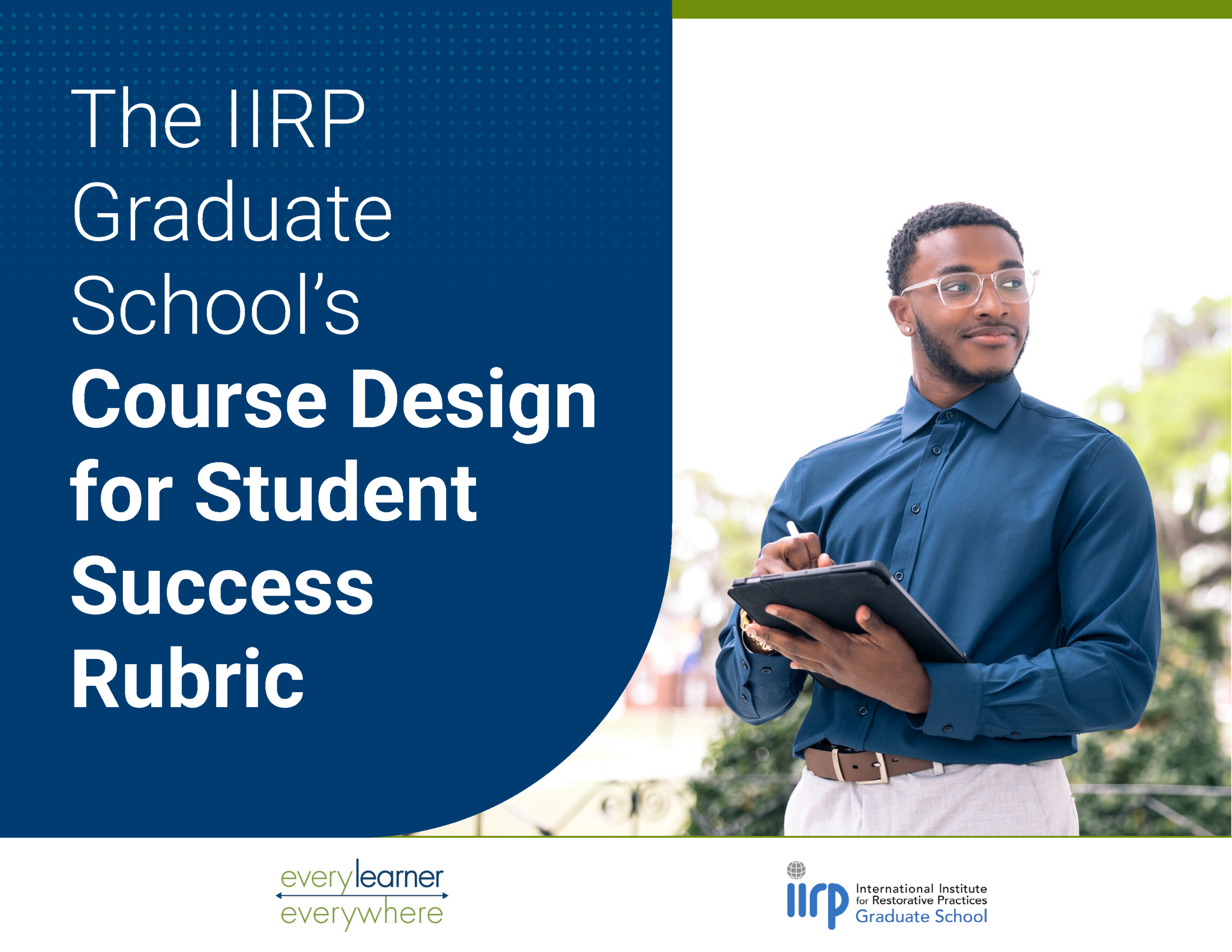
Resource Cover page from The IIRP Graduate School's Course Design for Student Success Rubric with title, photo of student holding tablet and org logos.

marzo 2026

The IIRP Graduate School’s Course Design for Student Success Rubric, is a robust rubric, designed to support student engagement, access, and success across varied learner populations and institutions, including undergraduate, graduate, 2-year, etc. We want to inspire faculty, instructional designers, and administrators along their path of continual improvement.

Pillar Resource
COVER page of Student Research Into How Students and Faculty Use AI- Insights for Teaching and Learning with title and photo and every learner everywhere logo.

enero 2026

This report offers a student-centered examination of generative AI in higher education—not a guide or endorsement, but a record of genuine student inquiry into AI’s potential and limitations. Students are already using AI, regardless of institutional policies. This student research helps faculty understand not just what tools students are using, but how they’re thinking about AI’s role in their education.