Every Learner Everywhere
Tyton Partners

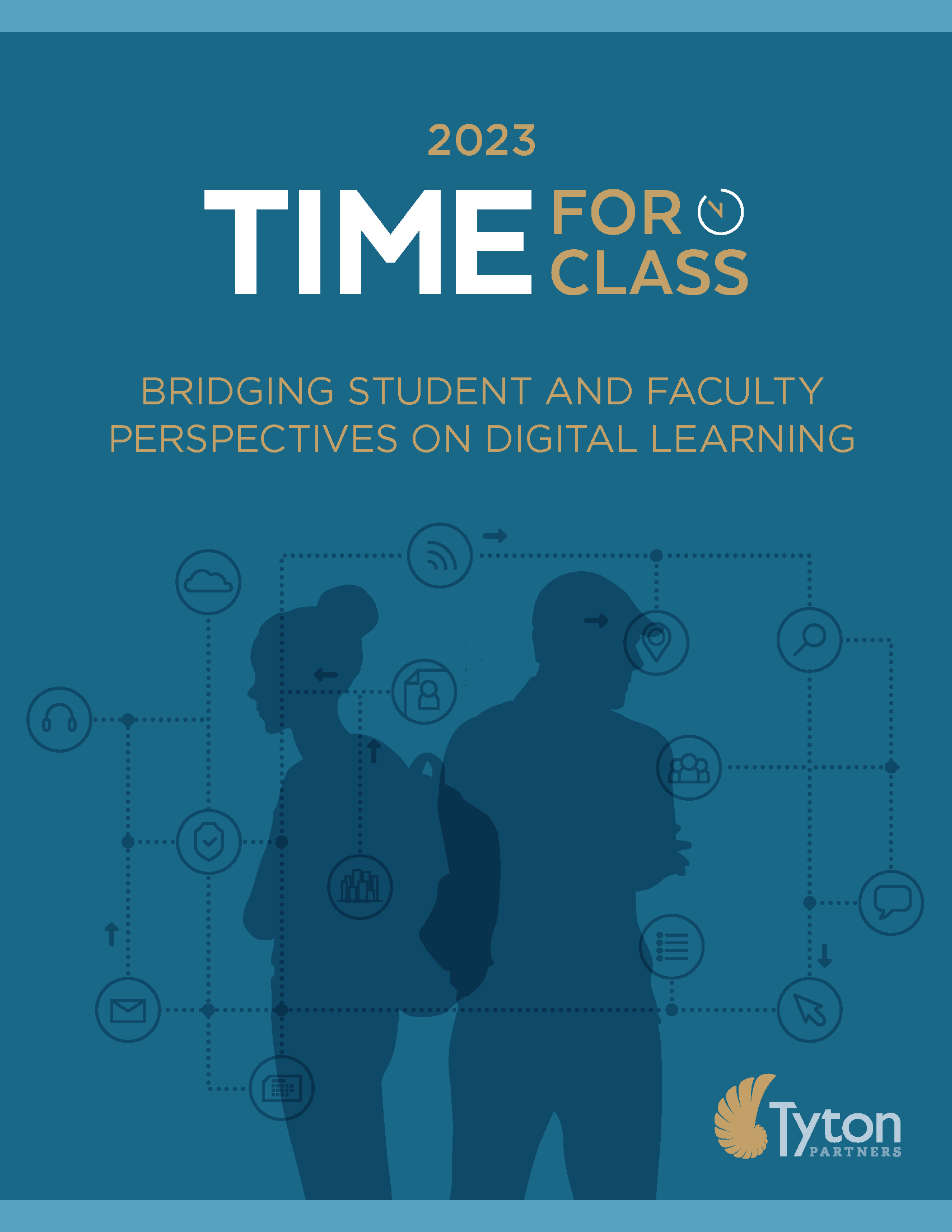
Time for Class 2023

Bridging Student and Faculty Perspectives on Digital Learning

Digital learning has become a prominent feature of modern education, with the potential to provide personalized instruction through technology-enhanced tools, communication, design, and support services in online, hybrid,  blended, and face-to-face learning environments. While digital learning tools can improve access and flexibility for underserved students, challenges exist that need to be addressed.

This 2023 study – the largest and longest running study monitoring digital learning in higher education – aims to identify the differences between student and institutional stakeholder experiences and preferences to suggest ways institutions and solution providers can address these differences.

Download our report, Time for Class 2023, that looks at data is gathered from three large-scale surveys conducted in Spring 2023, collecting insights from 2,048 students, 1,748 instructors, and 306 administrators. Respondents are representative of the diverse demographics of these populations and provide insight into the evolving – and at times at odds – perspectives of today’s learners, instructors, and university leaders.

Download Time for Class 2023
Recommended Citation

Bharadwaj, P., Shaw, C., NeJame, L., Martin, S., Janson, N., & Fox, K. (2023, June). Time for Class – 2023. Tyton Partners.

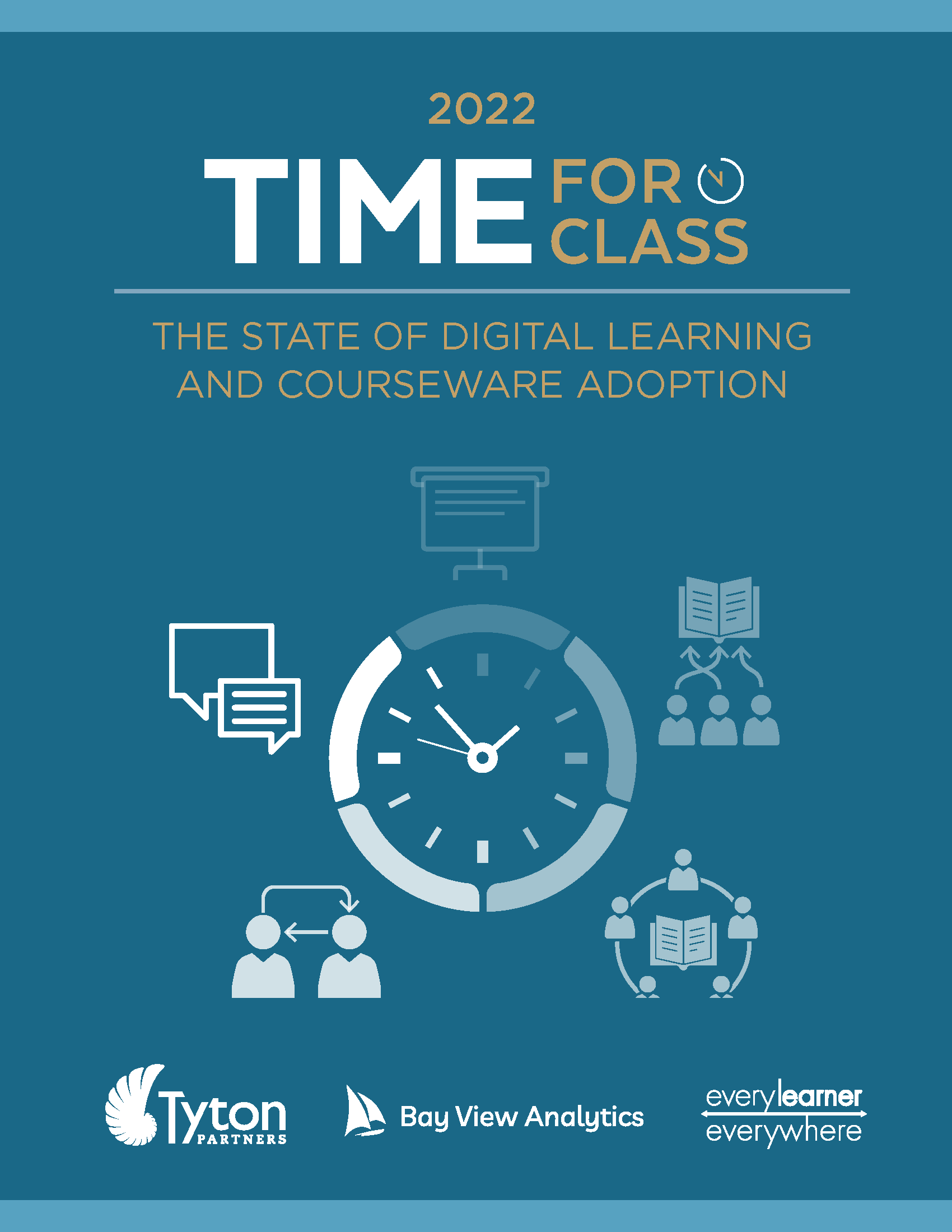
time for class 2022 digital learning and coursewarecover page

July 2022

Time for Class 2022 examines how faculty and institutional leaders are using instructional materials to implement teaching practices that can improve student learning and outcomes, especially for students historically underserved by higher education. This report reviews how digital learning in high-enrollment introductory courses can enable instructors to incorporate evidence-based teaching practices and work to close equity gaps in courses.

Time for Class: Digital Learning and Courseware Cover

June 2021

Time for Class is a comprehensive longitudinal survey of 4,000+ higher education faculty and administrators, fielded since 2014 by Tyton Partners.

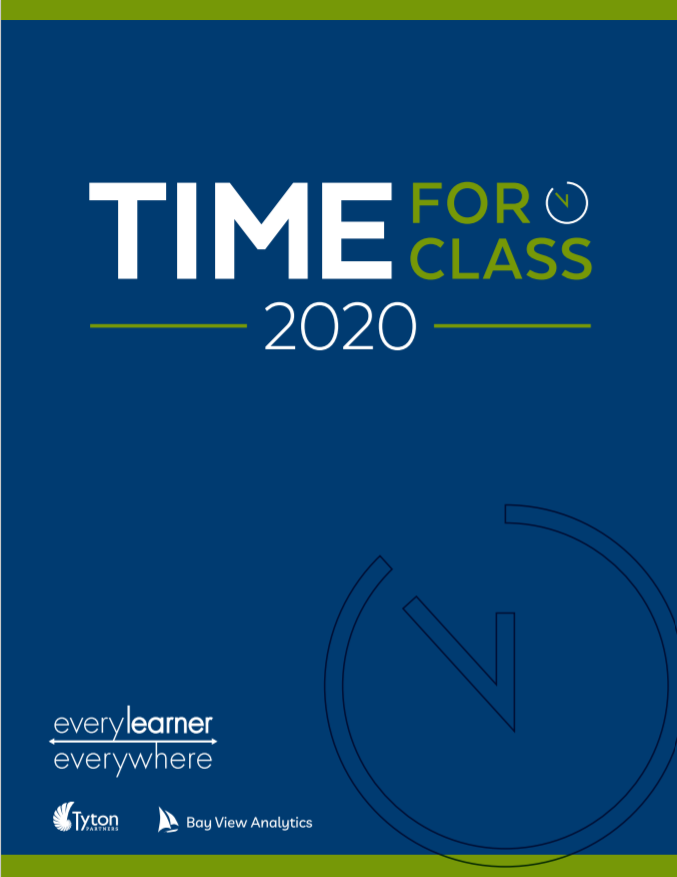
Time for Class 2020 Cover Image

July 2020

This survey is designed to help higher education stakeholders gain an understanding of digital learning tools for increasing affordability and accessibility for students.

Other Related Resources

Pillar Resource
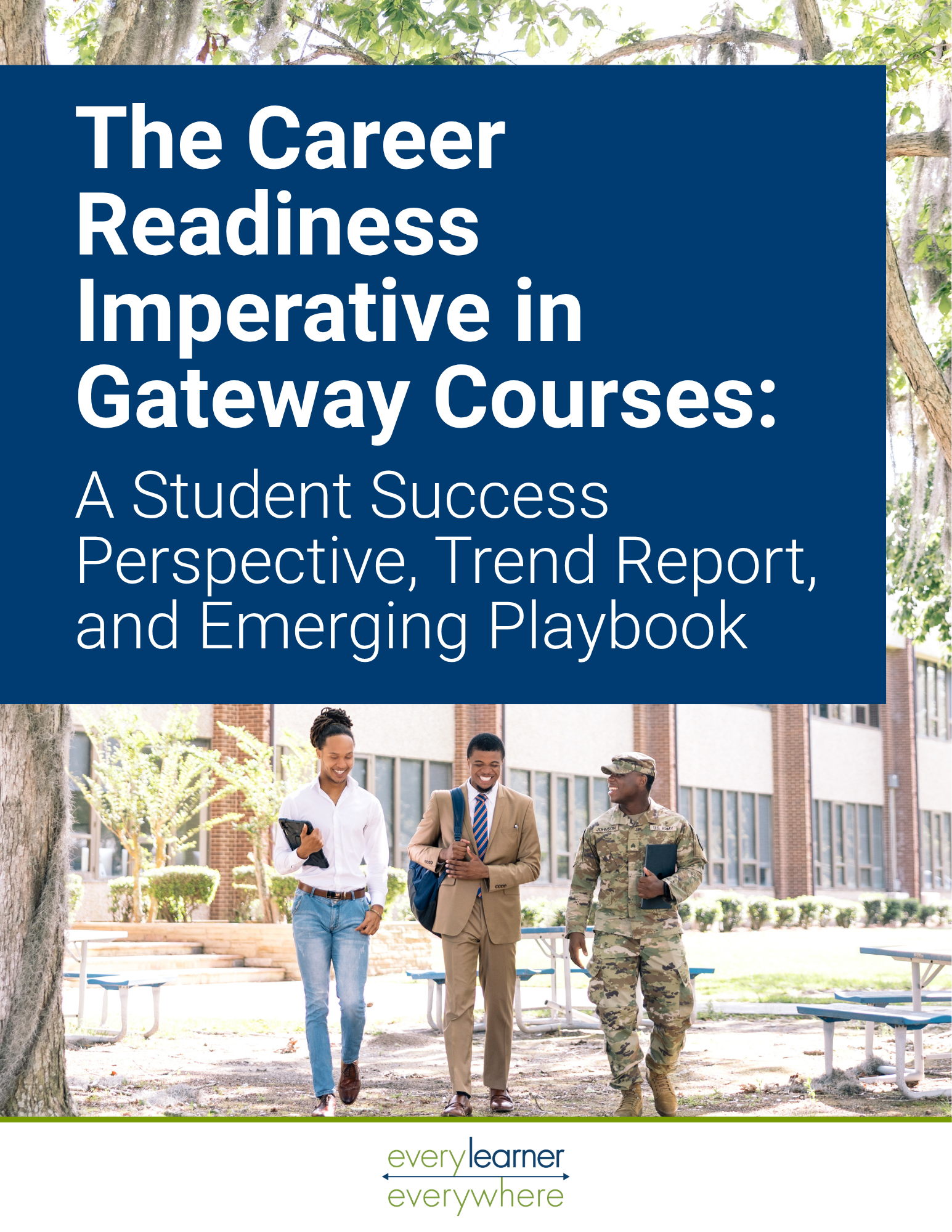
Three college students walk on a campus path in front of a brick building, one in casual attire with a tablet, another in a suit with a backpack, and the third in military uniform carrying a folder. Image depicts the career readiness imperative.

April 2026

This resource examines the growing trend of U.S. colleges and universities integrating career readiness into academic courses, with particular attention to gateway and general education courses early in degree programs. It focuses on how students experience the relevance of what they learn in these early courses, and it provides strategies institutions can use to help students experience that relevance earlier, more explicitly, and more consistently.

Resource Cover page from The IIRP Graduate School's Course Design for Student Success Rubric with title, photo of student holding tablet and org logos.

March 2026

The IIRP Graduate School’s Course Design for Student Success Rubric, is a robust rubric, designed to support student engagement, access, and success across varied learner populations and institutions, including undergraduate, graduate, 2-year, etc. We want to inspire faculty, instructional designers, and administrators along their path of continual improvement.

Pillar Resource
COVER page of Student Research Into How Students and Faculty Use AI- Insights for Teaching and Learning with title and photo and every learner everywhere logo.

January 2026

This report offers a student-centered examination of generative AI in higher education—not a guide or endorsement, but a record of genuine student inquiry into AI’s potential and limitations. Students are already using AI, regardless of institutional policies. This student research helps faculty understand not just what tools students are using, but how they’re thinking about AI’s role in their education.