 See All Archived Resources

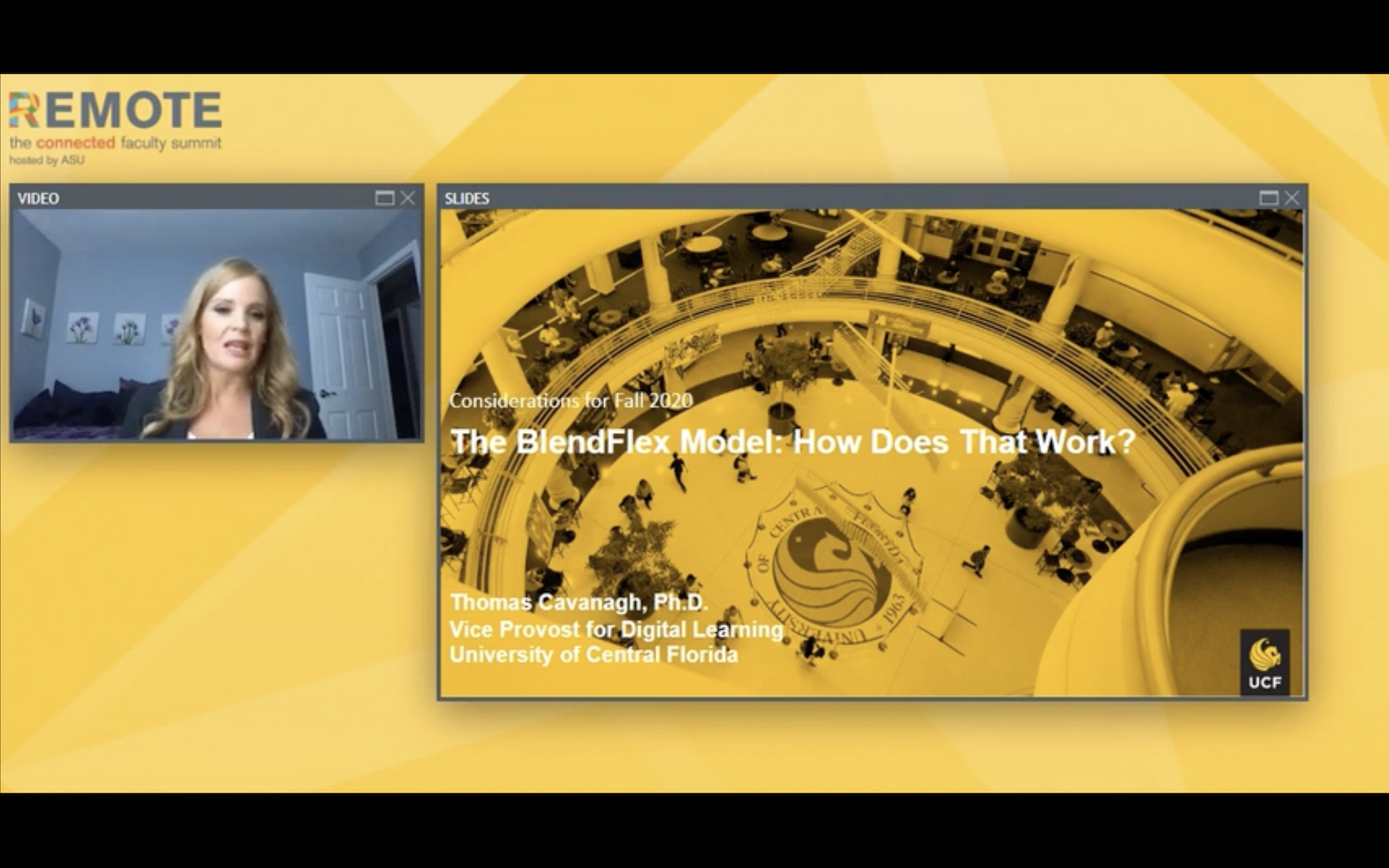
We expect that the 2020-2021 academic year will require a significant amount of flexibility on the part of both faculty and students. The BlendFlex delivery model intends to offer the maximum flexibility possible to accommodate a variety of shifting scenarios without compromising high academic quality expectations. For any typical instructional week, the class splits into smaller cohorts that meet physical distancing requirements in the assigned space. Students would only attend one in-person class meeting per week. When not in a physical class, students would “attend” the balance of the weekly instruction remotely either synchronously (live) or asynchronously (through a recorded session). Students cannot choose which day to attend in person—their only option is their assigned cohort day. Faculty could theoretically utilize the same syllabi and lesson planning (each cohort is a sub-part of the actual course section).
Thomas Cavanagh of the University of Central Florida and Athena Kennedy of Purdue University Online explain the BlendFlex delivery model, which provides flexibility in remote teaching.
This video is from the Remote Summit 2020.
 This resource has been archived and may not be fully accessible to WCAG 2.1 standards. If you need an accessible version of this video or a transcript, please fill out our Every Learner Accessibility Request Form.