Every Learner Everywhere
Achieving the Dream
Intentional Futures
Part of
Archived Resources
Archived Resource

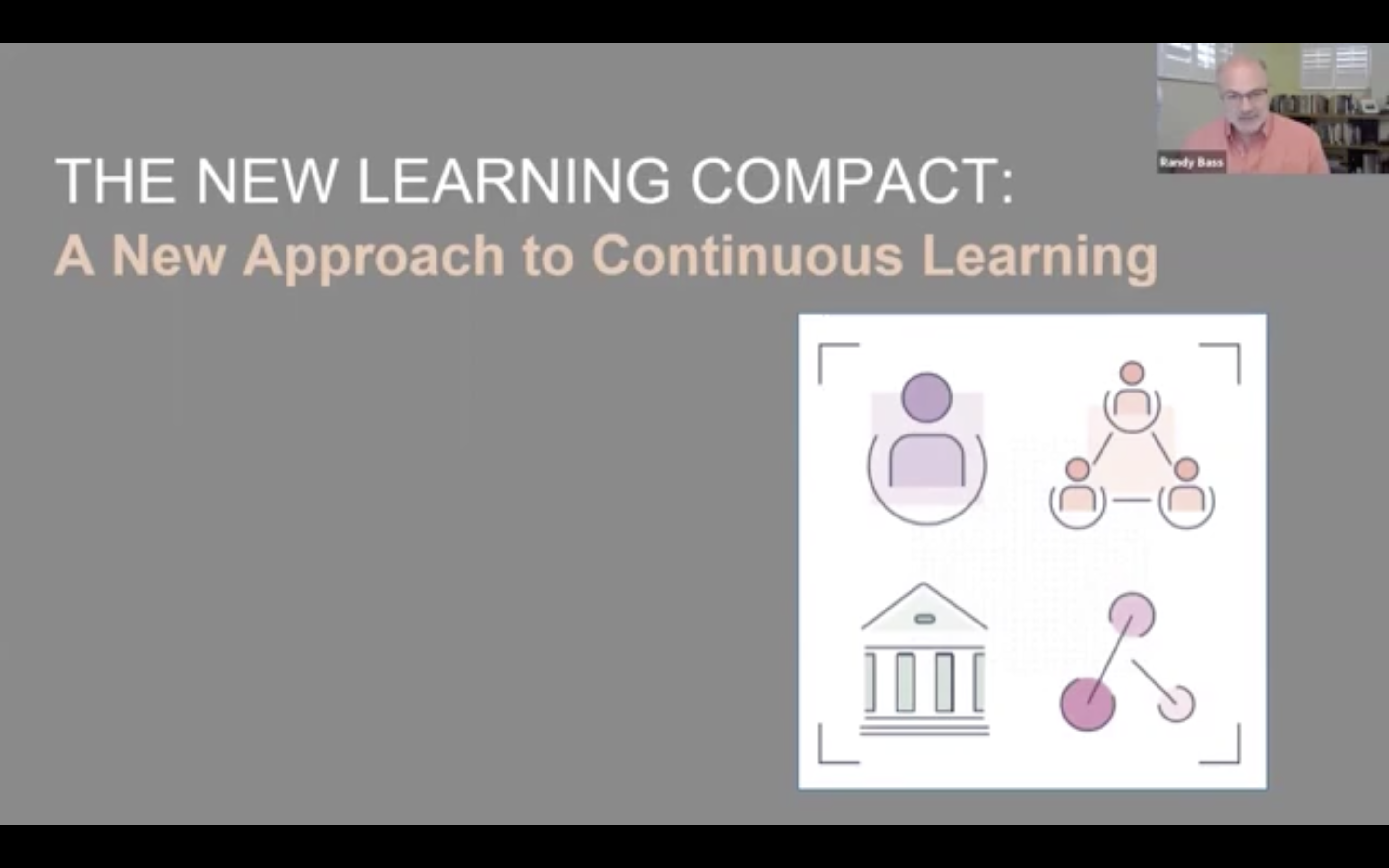
ASU Remote 2020: The New Learning Compact: Building a New Approach to Continuous Learning

The disruption created by the COVID-19 pandemic underscores the vital need for continuous learning that promotes collaborative and systemic improved outcomes for students, faculty, and staff. A rapidly changing environment requires campuses to evolve as agile and adaptive learning organizations. The New Learning Compact, an Every Learner Everywhere® asset, offers evidence-based principles for high impact professional development and a framework for continuous learning and strategic capacity building. This session introduces the NLC Framework and ways to leverage professional learning and development to meet the challenges of the pandemic era and prepare for a future of on-going change.

Randy Bass of Georgetown University, Bret Eynon of LaGuardia Community College, Laura Gambino of the New England Commission of Higher Education, and Noe Green of Arizona State University discuss the New Learning Compact Framework and the importance of leveraging professional learning and development during a crisis and beyond. This video is from the Remote Summit 2020.

DecorativeThis resource has been archived and may not be fully accessible to WCAG 2.1 standards. If you need an accessible version of this video or a transcript, please fill out our Every Learner Accessibility Request Form.

Recommended citation:

Bass, R., Eynon, B., Gambino, L. and Green, N. (2020, July 13) The New Learning Compact: Building a New Approach to Continuous Learning [Video] Every Learner Everywhere®.


Other Related Resources

Pillar Resource
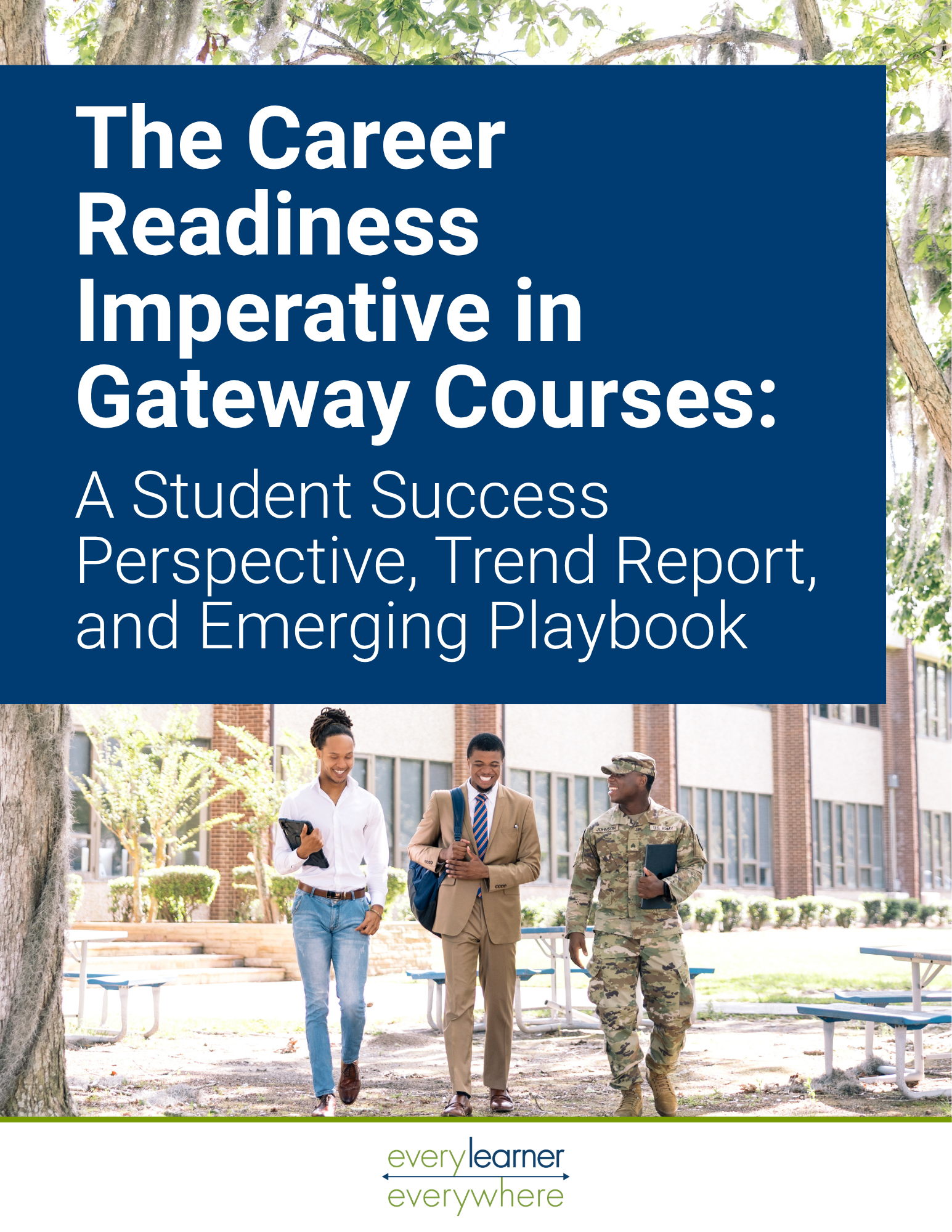
Three college students walk on a campus path in front of a brick building, one in casual attire with a tablet, another in a suit with a backpack, and the third in military uniform carrying a folder. Image depicts the career readiness imperative.

April 2026

This resource examines the growing trend of U.S. colleges and universities integrating career readiness into academic courses, with particular attention to gateway and general education courses early in degree programs. It focuses on how students experience the relevance of what they learn in these early courses, and it provides strategies institutions can use to help students experience that relevance earlier, more explicitly, and more consistently.

Resource Cover page from The IIRP Graduate School's Course Design for Student Success Rubric with title, photo of student holding tablet and org logos.

March 2026

The IIRP Graduate School’s Course Design for Student Success Rubric, is a robust rubric, designed to support student engagement, access, and success across varied learner populations and institutions, including undergraduate, graduate, 2-year, etc. We want to inspire faculty, instructional designers, and administrators along their path of continual improvement.

Pillar Resource
COVER page of Student Research Into How Students and Faculty Use AI- Insights for Teaching and Learning with title and photo and every learner everywhere logo.

January 2026

This report offers a student-centered examination of generative AI in higher education—not a guide or endorsement, but a record of genuine student inquiry into AI’s potential and limitations. Students are already using AI, regardless of institutional policies. This student research helps faculty understand not just what tools students are using, but how they’re thinking about AI’s role in their education.