Every Learner Everywhere
Part of
Archived Resources
Archived Resource

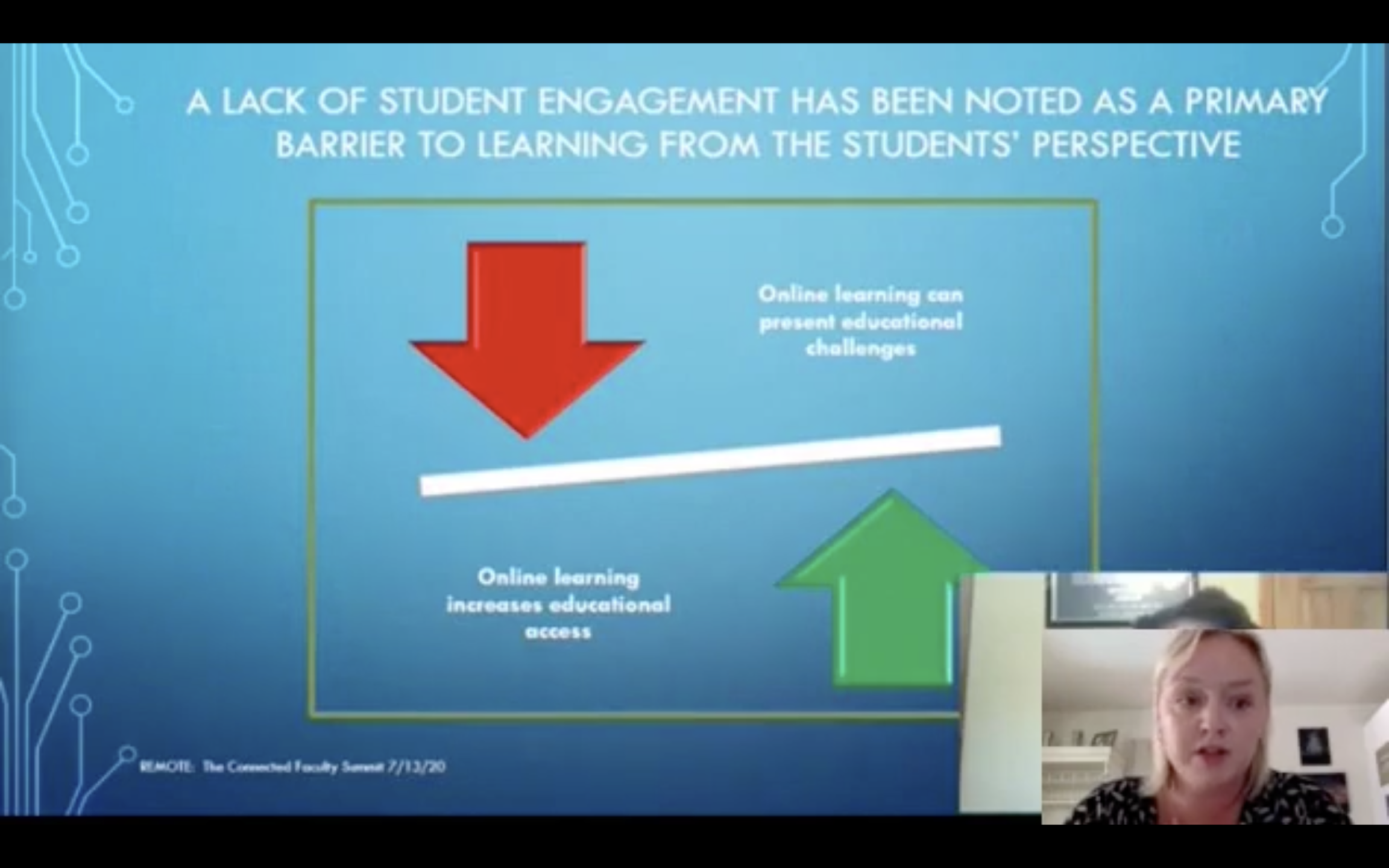
ASU Remote 2020: Transform Engagement: Interaction and Online Course Design

Interaction is the glue that holds the learning environment together. Rich media tools and thoughtful student, teacher, and content interactions can be used to inform “how we teach”. Examples of these tools include avatars, digital storytelling, interactive online poster boards, YouTube and other instructional videos, remote polling, video conferencing, and podcasts. Strategically incorporating technology enablers serves to increase student engagement and support learning. This session will provide a framework to design an interactive and engaging online course.

Dr. Michelle Hampton from the Cuyahoga Community College and Allison Forbes of the Walter Cronkite School of Journalism discuss how to structure online classes with engaging and interactive content. This video is from the Remote Summit 2020.

DecorativeThis resource has been archived and may not be fully accessible to WCAG 2.1 standards. If you need an accessible version of this video or a transcript, please fill out our Every Learner Accessibility Request Form.
Recommended citation:

Michele Hampton, M. and Forbes, A. (2020, July 13) Transform Engagement: Interaction and Online Course Design [Video] ASU Remote Summit.


Other Related Resources

Resource Cover page from The IIRP Graduate School's Course Design for Student Success Rubric with title, photo of student holding tablet and org logos.

March 2026

The IIRP Graduate School’s Course Design for Student Success Rubric, is a robust rubric, designed to support student engagement, access, and success across varied learner populations and institutions, including undergraduate, graduate, 2-year, etc. We want to inspire faculty, instructional designers, and administrators along their path of continual improvement.

Pillar Resource
COVER page of Student Research Into How Students and Faculty Use AI- Insights for Teaching and Learning with title and photo and every learner everywhere logo.

January 2026

This report offers a student-centered examination of generative AI in higher education—not a guide or endorsement, but a record of genuine student inquiry into AI’s potential and limitations. Students are already using AI, regardless of institutional policies. This student research helps faculty understand not just what tools students are using, but how they’re thinking about AI’s role in their education.

Pillar Resource
Four faculty members at conference table with laptop engaged in faculty development.

October 2025

This playbook is designed to guide faculty development professionals in colleges, universities, and other higher education organizations to develop and implement GenAI professional development opportunities for faculty and staff.