Every Learner Everywhere
Online Learning Consortium

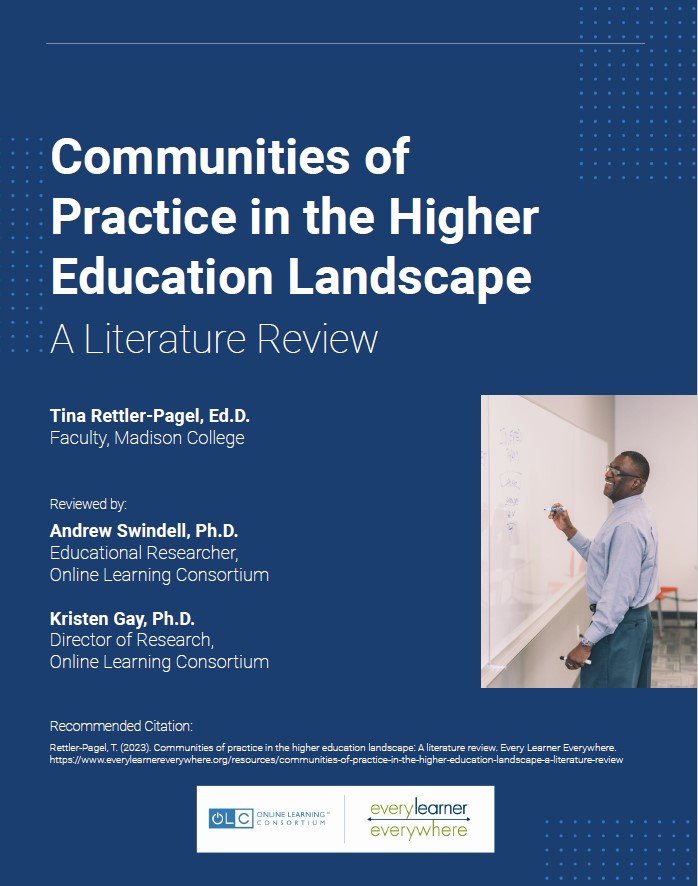
Communities of Practice in the Higher Education Landscape: A Literature Review

Communities of Practice (CoPs) are self-managed groups of people who have chosen to connect through a shared interest to learn reciprocally to improve their practice or craft (Lave & Wenger, 1991; Wenger, 1998; Mercieca, 2017). Over time, these groups build a collegial relationship, through which they share experiences and ideas that nurture the group’s passion for the topic(s) at hand and develop a “repertoire of communal resources” (Wenger, 1998). CoPs are growing in recognition and importance as a framework for shared exploration of topics of interest as a model for professional development within the higher education landscape (Tight, 2015).

While CoPs exist within many different types of organizations and for many variations of employee roles and types, this literature review explores the multiple dimensions of CoP, including the history, growth over time, current trends, evidence of best practices, and their significance to the field. In particular, the scope of the literature review focuses on the use and practices of CoPs within online, blended, and digital learning spaces.

Download the Communities of Practice in the Higher Education Landscape Literature Review

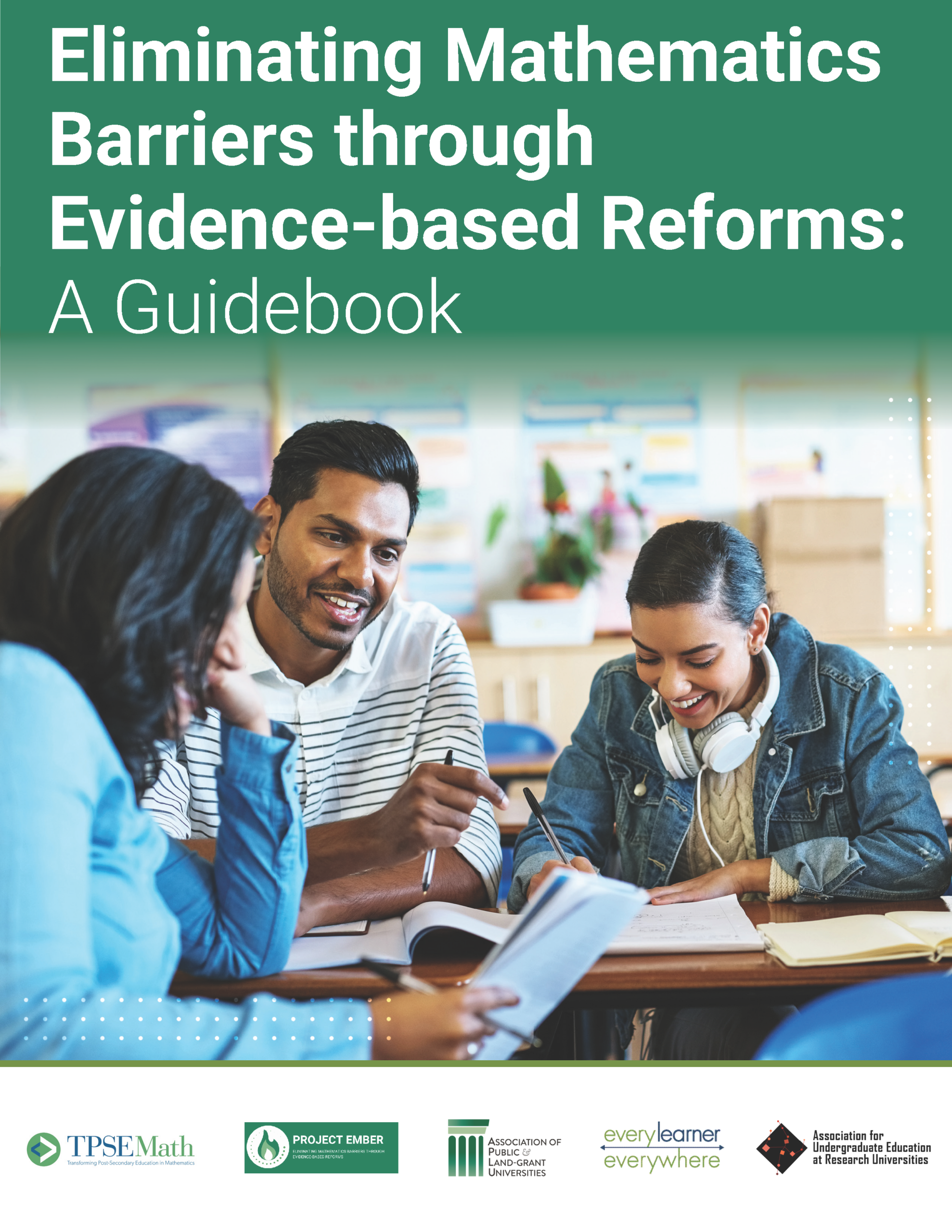
See also the companion resource: Communities of Practice in Higher Education: A Playbook for Centering Equity, Digital Learning, and Continuous Improvement
Recommended citation:

Rettler-Pagel, T. (2023). Communities of practice in the higher education landscape: A literature review. Every Learner Everywhere®. https://www.everylearnereverywhere.org/resources/communities-of-practice-in-the-higher-education-landscape-a-literature-review/

Other Related Resources

Pillar Resource
Three college students walk on a campus path in front of a brick building, one in casual attire with a tablet, another in a suit with a backpack, and the third in military uniform carrying a folder. Image depicts the career readiness imperative.

April 2026

This resource examines the growing trend of U.S. colleges and universities integrating career readiness into academic courses, with particular attention to gateway and general education courses early in degree programs. It focuses on how students experience the relevance of what they learn in these early courses, and it provides strategies institutions can use to help students experience that relevance earlier, more explicitly, and more consistently.

Resource Cover page from The IIRP Graduate School's Course Design for Student Success Rubric with title, photo of student holding tablet and org logos.

March 2026

The IIRP Graduate School’s Course Design for Student Success Rubric, is a robust rubric, designed to support student engagement, access, and success across varied learner populations and institutions, including undergraduate, graduate, 2-year, etc. We want to inspire faculty, instructional designers, and administrators along their path of continual improvement.

Pillar Resource
COVER page of Student Research Into How Students and Faculty Use AI- Insights for Teaching and Learning with title and photo and every learner everywhere logo.

January 2026

This report offers a student-centered examination of generative AI in higher education—not a guide or endorsement, but a record of genuine student inquiry into AI’s potential and limitations. Students are already using AI, regardless of institutional policies. This student research helps faculty understand not just what tools students are using, but how they’re thinking about AI’s role in their education.