 See All Archived Resources


Part 3: The Impact of 2020 on Introductory Faculty and their Students
 This past fall, higher education faculty across the country, after having worked throughout the summer to rebuild and redesign courses, showed up to “keep teaching” for their students, primarily in hybrid, highly-flexible and online courses.
As we close in on the one-year mark of the pandemic, 852 faculty teaching introductory courses are calling for urgent action as they report increases in the percentage of students who get a D or F grade, withdraw from a course, or show incomplete progress. The pattern is especially prevalent within two-year institutions and at institutions serving higher rates of poverty-affected students.
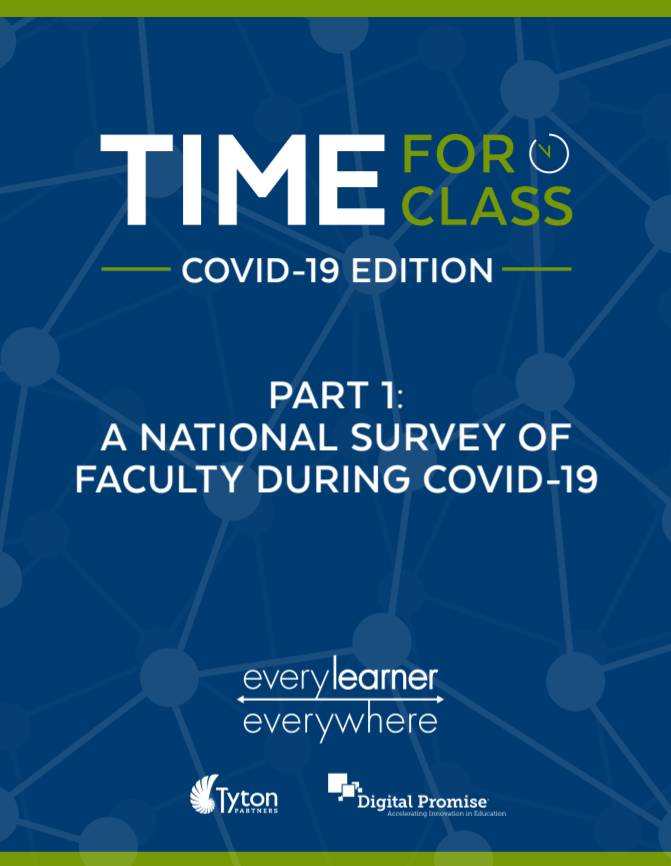
Time for Class – The Impact of 2020 on Introductory Faculty and their Students is the third report in an ongoing series designed to understand the ongoing impact of the COVID-19 pandemic on teaching and learning in higher education; it serves as a follow-up to our first two reports, Time for Class – A National Survey of Faculty During COVID-19 and Time for Class – Planning for a Fall Like No Other. In this report we focus solely on the experiences of a consistent group of faculty teaching introductory courses, who shared their perspectives with us at three points over the course of the pandemic in 2020. Understanding the experiences of faculty teaching introductory-level courses is important, given the critical role these faculty play in delivering courses that impact student retention and progression. High-enrollment introductory-level English, STEM, and other general education courses serve as gateways to degree paths but often function as gatekeepers: high failure rates in these gateway courses lead to significant dropout rates between the first and second year, and at disproportionately high numbers for poverty-affected and racially minoritized students. The experiences and challenges of faculty teaching these courses are critically important to understand as we consider the near- and long-term impact on equity and access in higher education.
This grand unplanned experiment has prompted fundamental changes that we expect to see persist. Increased exposure to the use of digital learning techniques and tools has the potential to help faculty use these strategies post-pandemic to support student learning and change how their time is used to support students. In addition, the pandemic has brought to light issues that call for long-term strategic responses from institutions, suppliers, and policy-makers so that we can ensure that every student everywhere is able to learn.
This resource has been archived and may not be fully accessible to WCAG 2.1 standards. If you need an accessible version of this document, please fill out our Every Learner Accessibility Request Form.