Every Learner Everywhere
Association of Public and Land-grant Universities

Improving Critical Courses Using Digital Learning & Evidence-based Pedagogy

Higher education’s response to the COVID-19 pandemic has ignited the need to improve student success in high-priority courses and to improve equity for Black, Latino, Indigenous, poverty-affected, and first-generation learners. The 2020 spring and summer terms catalyzed a continuous improvement strategy that required educators to leverage flexible learning environments, including hyflex, hybrid, fully online, and classroom-based digital teaching and learning environments, that will extend well into the post-pandemic future. Department chairs (as both faculty and academic leaders), deans, provosts, and other academic administrators are helping to lead this continuous improvement strategy. These academic administrators are overseeing and supporting the development of high-quality teaching and learning environments that can seamlessly switch back and forth between in-person and online education.

This guide features numerous links to resources academic administrators can draw from to effectively support a continuously improved teaching and learning environment that is sustainable for years to come.

Download Improving Critical Courses Using Digital Learning & Evidence-based Pedagogy
Recommended Citation:

Vignare, K., Lorenzo, G., Tesene, M., and Reed, N. (2020). Improving Critical Courses Using Digital Learning & Evidence-based Pedagogy. Joint publication of Association of Public and Land-grant Universities and Every Learner Everywhere®.

Other Related Resources

Pillar Resource
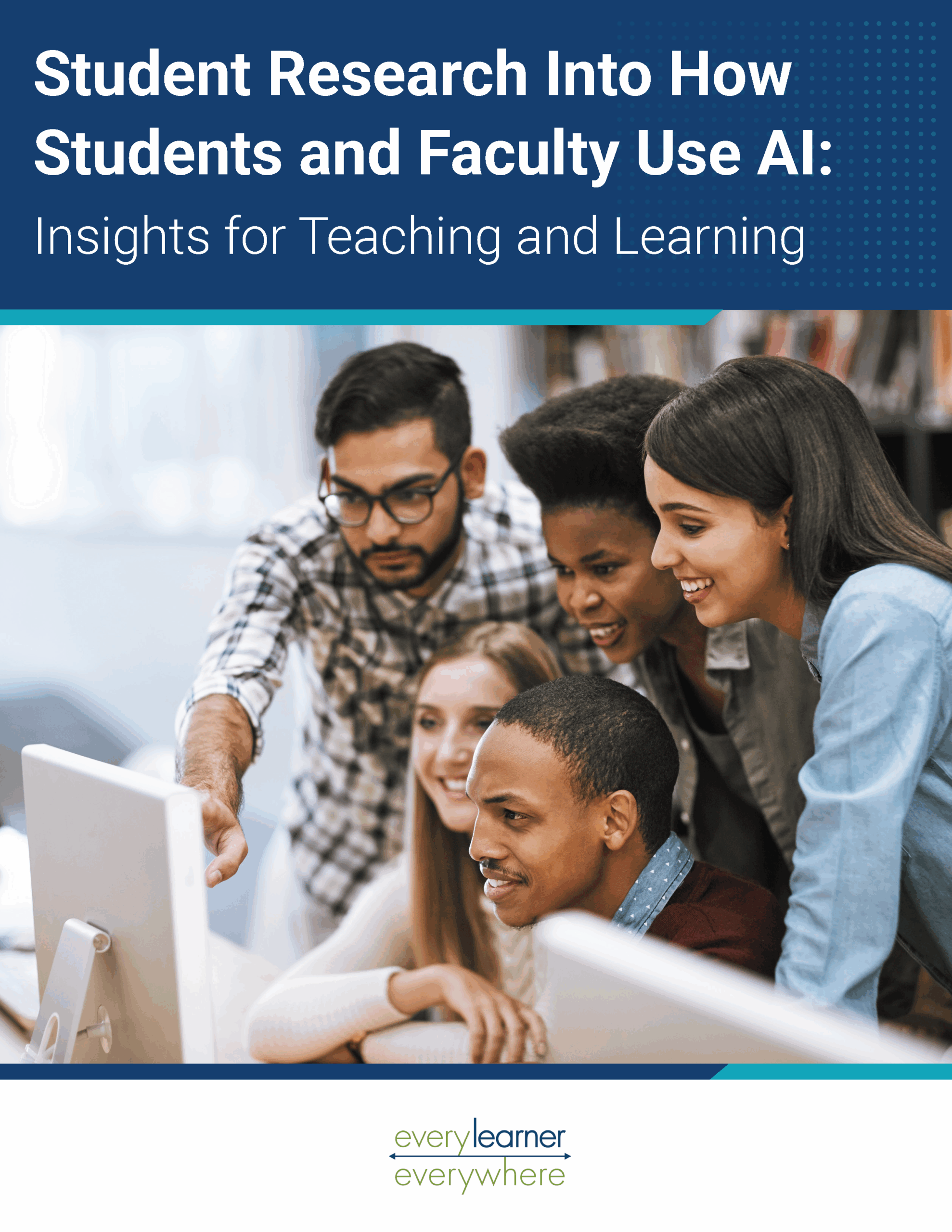
COVER page of Student Research Into How Students and Faculty Use AI- Insights for Teaching and Learning with title and photo and every learner everywhere logo.

January 2026

This report offers a student-centered examination of generative AI in higher education—not a guide or endorsement, but a record of genuine student inquiry into AI’s potential and limitations. Students are already using AI, regardless of institutional policies. This student research helps faculty understand not just what tools students are using, but how they’re thinking about AI’s role in their education.

Pillar Resource
Four faculty members at conference table with laptop engaged in faculty development.

October 2025

This playbook is designed to guide faculty development professionals in colleges, universities, and other higher education organizations to develop and implement GenAI professional development opportunities for faculty and staff.