Every Learner Everywhere

Equity Principles for Teaching and Learning in Higher Education Strategy Guide

Equity Principles for Teaching and Learning in Higher Education is one of a series of teaching strategy guides published by Every Learner Everywhere® for the purpose of highlighting how the three facets of our mission, equity in higher education, digital learning, and evidence-based teaching practices, can be applied in higher educational courses.

Equity Principles for Teaching and Learning in Higher Education details our network’s eight equity principles and their application to equitable teaching with the goal of redesigning postsecondary digital learning opportunities to more intentionally center the needs, outcomes, and experiences of Black, Latino, and Indigenous students, as well as students experiencing poverty.

The eight equity principles include:

  1. Put equity first
  2. Adopt an asset-based lens
  3. Reflect on biases
  4. Analyze systems
  5. Focus on outcomes
  6. Disaggregate data to the finest point possible
  7. Broaden participation
  8. Respect student experiences
Download Equity Principles for Teaching and Learning in Higher Education

Recommended citation:

Rodgers, A. and O’Sullivan, P. (2022) Equity Principles for Teaching and Learning in Higher Education. Every Learner Everywhere®. https://www.everylearnereverywhere.org/resources/equity-principles-for-teaching-and-learning-in-higher-education/

Other Related Resources

Pillar Resource
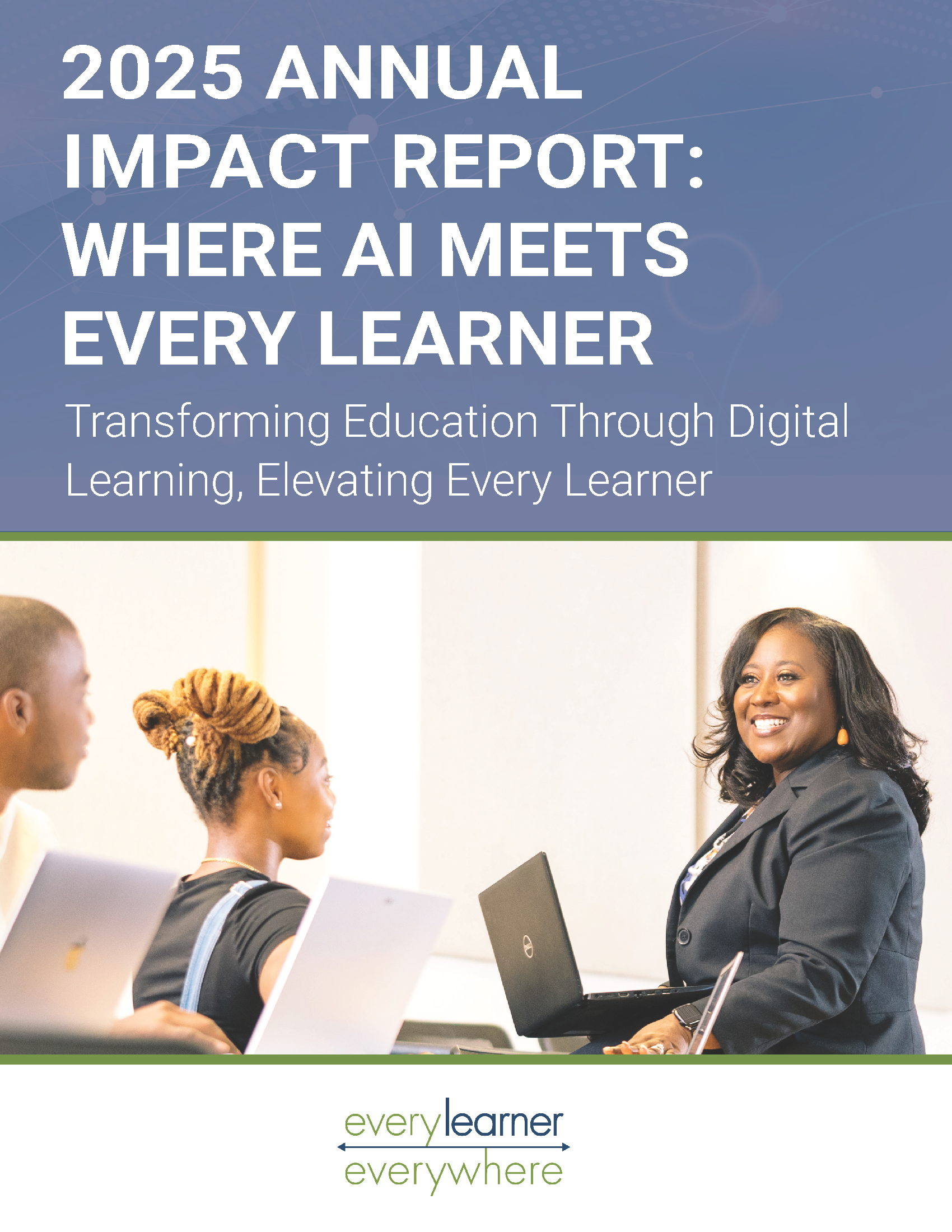
Cover page of the 2025 annual impact report: Where AI Meets Every Learner. With a photo of a female professor holding a laptop smiling with two students seated in front.

May 2026

In 2025, Every Learner Everywhere helped hundreds of higher education institutions navigate a rapidly changing landscape, expanding access to evidence-based digital learning, deepening student success for every learner, and meeting the moment as AI reshapes what’s possible in the classroom.

Pillar Resource
Three college students walk on a campus path in front of a brick building, one in casual attire with a tablet, another in a suit with a backpack, and the third in military uniform carrying a folder. Image depicts the career readiness imperative.

April 2026

This resource examines the growing trend of U.S. colleges and universities integrating career readiness into academic courses, with particular attention to gateway and general education courses early in degree programs. It focuses on how students experience the relevance of what they learn in these early courses, and it provides strategies institutions can use to help students experience that relevance earlier, more explicitly, and more consistently.

Resource Cover page from The IIRP Graduate School's Course Design for Student Success Rubric with title, photo of student holding tablet and org logos.

March 2026

The IIRP Graduate School’s Course Design for Student Success Rubric, is a robust rubric, designed to support student engagement, access, and success across varied learner populations and institutions, including undergraduate, graduate, 2-year, etc. We want to inspire faculty, instructional designers, and administrators along their path of continual improvement.