Every Learner Everywhere
Project EMBER
Transforming Postsecondary-Education in Mathematics (TPSE Math)
Association for Undergraduate Education at Research Universities
Association of Public and Land-grant Universities

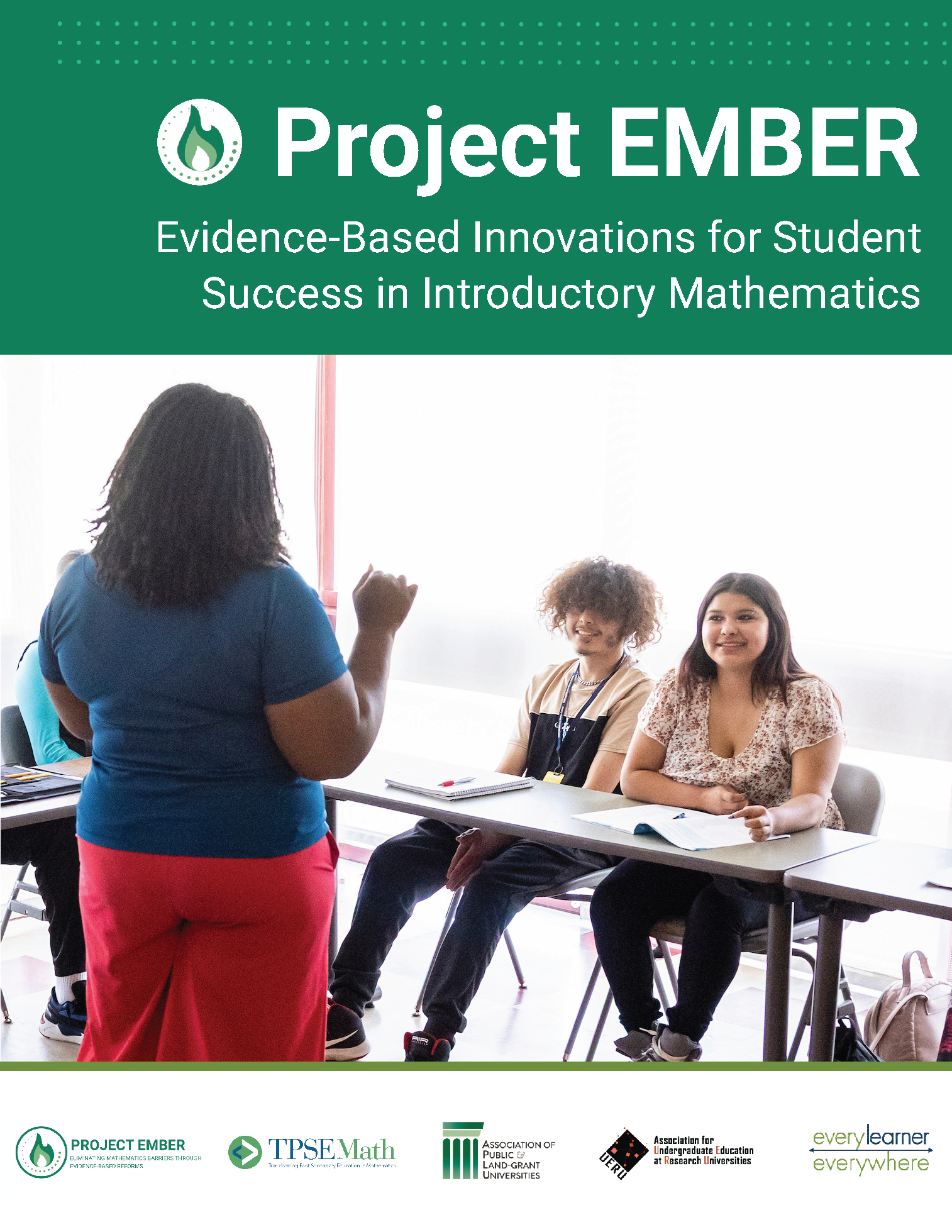
Evidence-Based Innovations for Student Success in Introductory Mathematics

Introductory mathematics can open the door to college completion and STEM careers for every student. Decades of research and practice have produced reforms that work, and this resource from Project EMBER (Eliminating Mathematics Barriers through Evidence-based Reforms) brings them together in one place. It’s designed to help teaching-focused faculty, course coordinators, and department and institutional leaders answer a practical question: which reforms should we try?

Evidence-Based Innovations for Student Success in Introductory Mathematics, developed by Every Learner Everywhere in partnership with Project EMBER, a collaborative initiative of TPSE Math,  APLU, and The Association for Undergraduate Education at Research Universities (UERU), covers eight evidence-based innovations: active pedagogy, course coordination, math pathways, corequisite supports, tech-enabled instruction, alternative grading, using data in decision-making, and identity and belonging. Each overview includes a short description, the supporting research, case studies from institutions, professional development resources, and connections to the other innovations. It works alongside the Project EMBER Guidebook to help departments plan changes that fit their own context.

Key highlights

  • Research-backed results: A large meta-analysis of STEM courses found failure rates were 55% higher in lecture-based classes than in active learning classes.
  • Courses matched to student goals: In one analysis, 63% of StatWay and QuantWay students earned college-level credit in a single semester, compared with 21% in traditional models.
  • Real-world case studies: Examples from Cal State East Bay, Cal State LA, Cal Poly, Florida International University, Oklahoma State University, and the University of Michigan.
  • A growing community: Faculty can join the EMBER Network for Teaching-Focused Faculty to connect with colleagues and share strategies.
Download Evidence-Based Innovations for Student Success in Introductory Mathematics

Recommended Citation

Pilgrim, M. E., Callahan, K.M., Carney, D., Kung, D., La Rose, P.G., Lindsey, M., Rasmussen, C., Speer, N., & Tesene, M (Eds). (2026). Project EMBER Evidence-Based Innovations for Student Success in Introductory Mathematics. Every Learner Everywhere. everylearnereverywhere.org/resources/project-ember-innovations-for-student-success


Other Related Resources

Pillar Resource

August 2026

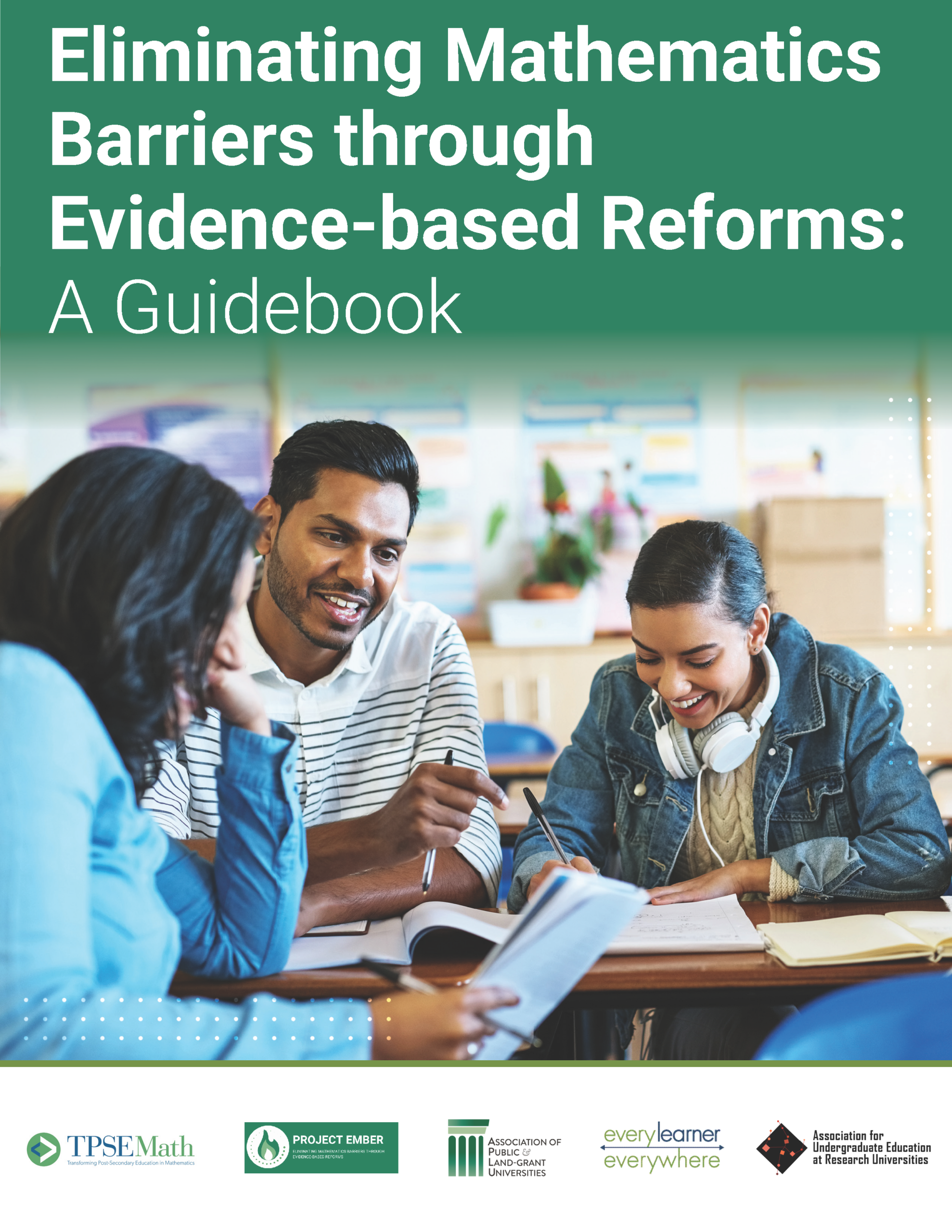
This guidebook gives your institution a clear, practical roadmap for transforming introductory mathematics, from first conversations to lasting, systemic change. This isn’t a theoretical framework. It’s a field-tested, action-oriented resource grounded in real research and real institutional experience, designed to help your team move from “we know something needs to change” to “here’s our plan, and here’s who’s doing what.”

Pillar Resource
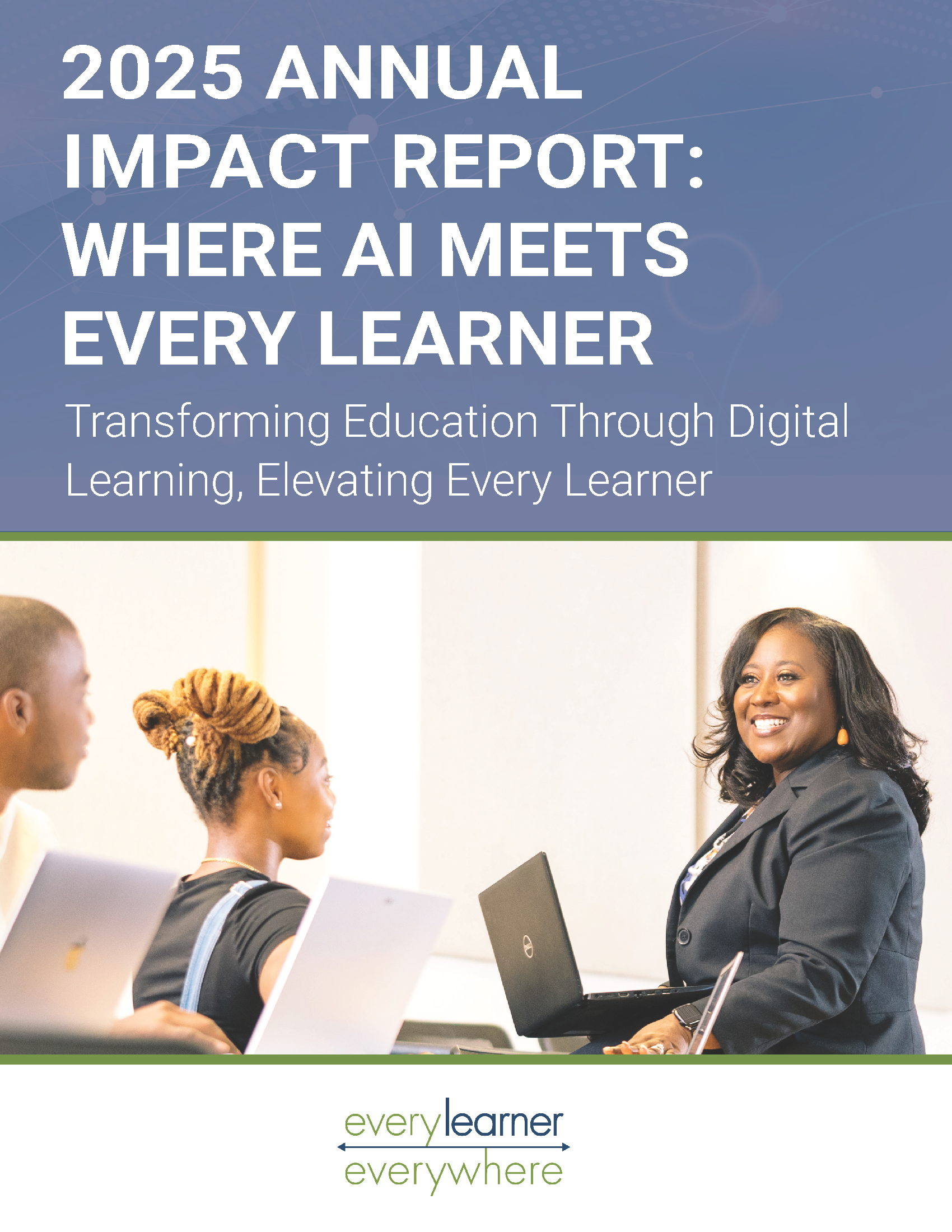
Cover page of the 2025 annual impact report: Where AI Meets Every Learner. With a photo of a female professor holding a laptop smiling with two students seated in front.

May 2026

In 2025, Every Learner Everywhere helped hundreds of higher education institutions navigate a rapidly changing landscape, expanding access to evidence-based digital learning, deepening student success for every learner, and meeting the moment as AI reshapes what’s possible in the classroom.

Pillar Resource
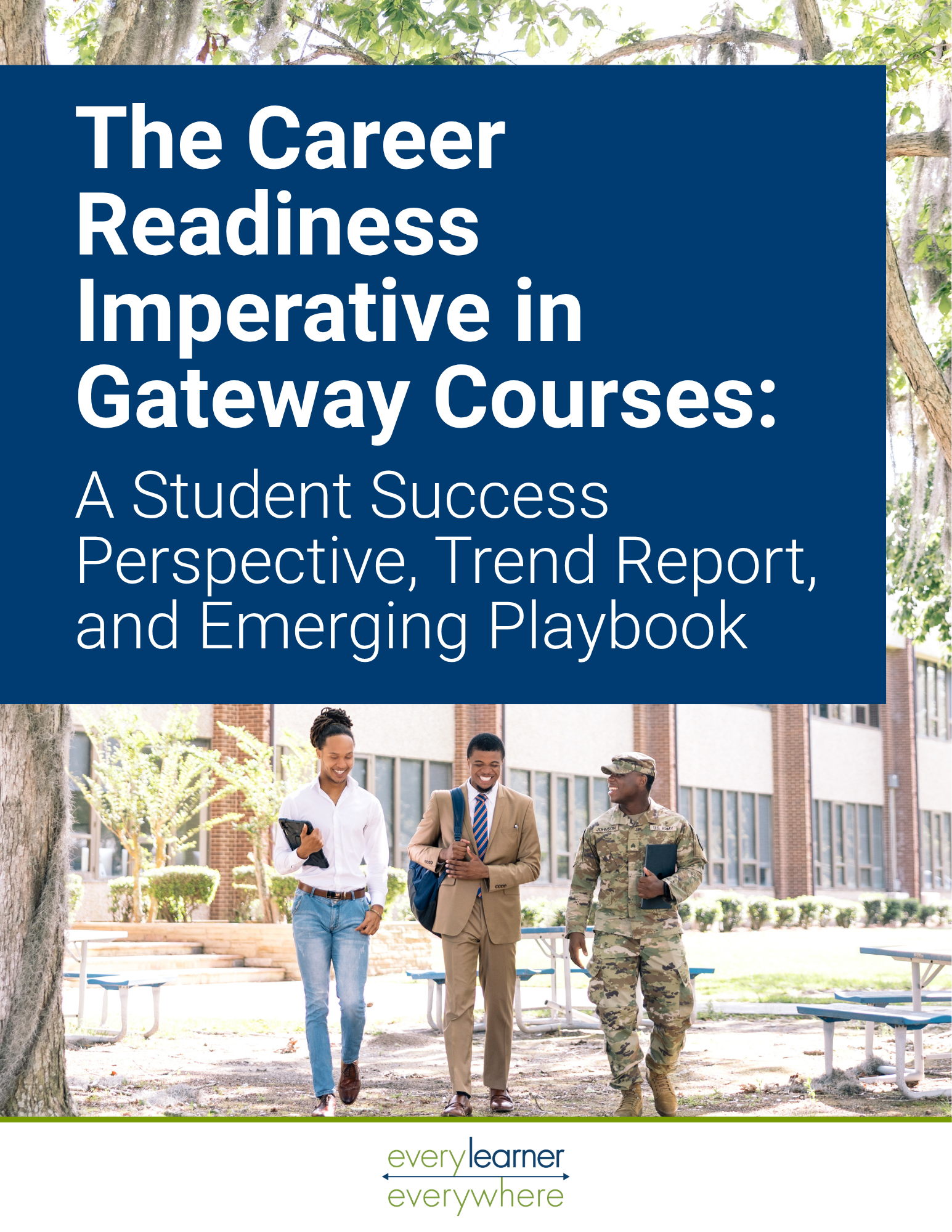
Three college students walk on a campus path in front of a brick building, one in casual attire with a tablet, another in a suit with a backpack, and the third in military uniform carrying a folder. Image depicts the career readiness imperative.

April 2026

This resource examines the growing trend of U.S. colleges and universities integrating career readiness into academic courses, with particular attention to gateway and general education courses early in degree programs. It focuses on how students experience the relevance of what they learn in these early courses, and it provides strategies institutions can use to help students experience that relevance earlier, more explicitly, and more consistently.